Standard medicine has given post orgasmic illness syndrome (POIS) sufferers antihistamines, anti-inflammatory drugs, SSRIs, and in some cases experimental hormonal treatments. For some men these help. For many others they do very little. And for almost everyone, they treat the symptoms without ever touching what is causing them.
This is where a different kind of conversation is happening. Not in medical journals, but in patient forums, recovery communities, and the real lives of men who have spent years looking for answers that clinical trials have not yet produced. What they are finding is not a cure. But it is something medicine has been slow to take seriously — a way of understanding POIS that goes deeper than the immune system and points toward the nervous system, stored stress, and surprisingly powerful tools that are available to anyone willing to do the work.
This article explores those non-orthodox approaches, not as replacements for medical care, but as serious additions to it.
The non-orthodox approach to managing POIS starts with a question that conventional treatment almost never asks. What state is the nervous system in when ejaculation happens?
Men who have experienced real recovery from POIS through non-medical means consistently describe the same pattern. When the nervous system is calm and the body feels genuinely safe, ejaculation tends to be processed normally. But when the nervous system is already stuck in a stress response — what scientists call fight, flight, or freeze — ejaculation can push it over the edge. The body reads a natural biological event as a threat. The wave of inflammation, mental disruption, and physical collapse that follows is what we call a POIS attack.
This does not reject the idea that POIS involves the immune system. It goes one layer deeper. A nervous system locked in survival mode is already producing high levels of stress hormones and inflammatory signals. Ejaculation in that state does not create a crisis from nothing. It makes one that was already building much worse.
Understanding this, changes what recovery looks like. Instead of only looking for something to block the immune reaction, the real question becomes: how do I teach my nervous system to feel safe? To answer that question, let’s look at the non-orthodox approaches that are changing the conversation.
Vagus Nerve Stimulation
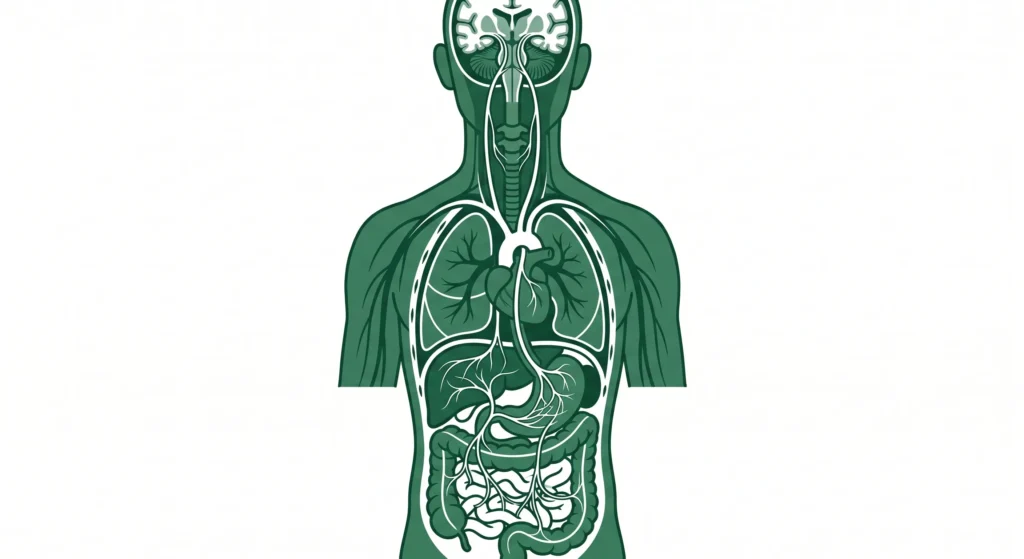
The vagus nerve is the longest nerve in the body. It runs from the base of the brain all the way through the neck, chest, and abdomen. It is the main pathway of the parasympathetic nervous system, which is the system responsible for rest, recovery, and digestion. When the vagus nerve is working well, the body can move smoothly between being alert and being calm. When it is underactive, which happens often in people dealing with chronic stress, the body gets stuck in a state of activation it cannot get out of.
Research has shown that stimulating the vagus nerve reduces inflammation, supports immune regulation, and pulls the nervous system out of fight-or-flight mode. The NIH has invested heavily in studying its potential across many conditions.
Several men in POIS patient communities report that regular vagus nerve work meaningfully reduced the severity of their attacks over time. The practices they describe most often include:
- Cold water on the face or neck. This triggers something called the diving reflex, which stimulates vagal tone almost immediately. Splashing cold water on your face after waking up is enough to start. People dip their face into a bowel of cold water in the morning or evening after a stressful day.
- Humming and gargling. Both of these vibrate the muscles at the back of the throat where vagus nerve endings are concentrated. They are simple, free, and surprisingly effective.
- Slow exhale breathing. Breathing in a pattern where your exhale is longer than your inhale activates the parasympathetic nervous system through the vagus nerve. Breathe in for 4 seconds and out for 8 seconds.
- Singing. Singing combines breath control, vibration, and emotional expression in a way that consistently activates the vagus nerve. Any singing counts.
- None of these cost anything. All of them require consistency over time.
Diaphragmatic Breathing and Diaphragm Massage
Deep belly breathing, where you breathe down into your stomach rather than just your chest, has strong research behind it for nervous system regulation. Studies consistently show it lowers cortisol, reduces heart rate, decreases inflammatory markers, and shifts the body toward the parasympathetic state where healing happens.
One man in a POIS recovery community described diaphragm massage specifically as a major turning point for clearing his mental fog. Diaphragm massage involves gentle manual pressure on the diaphragm muscle, releasing tension that builds up there during long periods of stress. Somatic therapists and physiotherapists have used this technique for years. For men whose POIS shows up most strongly as cognitive symptoms and brain fog, the connection between diaphragm tension, vagal tone, and mental clarity is more direct than most people expect.
The 4-7-8 breathing technique is a simple way to start. Breathe in for 4 seconds, hold for 7, breathe out for 8. This can be done anywhere at any time and has a measurable calming effect on the nervous system within minutes.
Somatic Therapy and Emotional Processing
Of all the non-orthodox approaches covered in this article, this one is the most likely to be dismissed. It is also the one that long-term recovery accounts describe as the most transformative.
Somatic therapy is a body-centered approach to healing built on the understanding that unresolved trauma and chronic stress are not stored only in the mind but in the physical body, in the tissues, muscles, stomach, and nervous system itself. Unlike regular talk therapy, which works through language and thinking, somatic approaches work directly with physical sensations, movement, and breath to access and release what the nervous system has been holding onto.
Research supports somatic experiencing as an effective treatment for PTSD and chronic nervous system dysregulation. The idea is that by paying attention to what is happening in the body rather than just the thoughts in the head, the body gets a chance to complete stress responses that were interrupted or buried.
For POIS sufferers, the connection to recovery shows up in a consistent pattern across multiple accounts. Men describe using distraction, pornography, gaming, food, and social media to avoid uncomfortable feelings rather than letting those feelings surface and pass. One long-term sufferer, writing after seven years living with POIS and near-complete recovery, said the turning point was not finding the right medication.
It was slowly learning to let feelings come up instead of pushing them back down. As that work deepened, his POIS symptoms gradually faded.
This is not saying POIS is a psychological condition. It is saying that the nervous system does not separate the emotional from the physical. Healing one without the other is why so many treatments produce only partial results.
Nasal Irrigation
For men whose POIS attacks hit hardest in the nose, this one is worth knowing about. Around 33% of men with POIS experience significant nasal symptoms during an attack. Congestion, a runny nose, and relentless sneezing that makes functioning normally almost impossible.
But nasal irrigation does something far more important than clearing a blocked nose. And understanding that bigger picture changes how you think about this simple practice entirely.
Nasal irrigation is one of the oldest and most effective tools for clearing inflamed nasal passages quickly. The practice involves gently flushing the nasal passages with warm water, clearing out the inflammatory mucus that builds up during an immune response and restoring easier breathing within minutes. High-volume, low-pressure saline irrigations are the most efficient method for removing infectious agents, allergens, and inflammatory mediators from the nasal passages. During a POIS attack, the nasal lining is loaded with those inflammatory mediators. Flushing them out removes part of the inflammatory burden the body is trying to manage, reducing the overall load on a system already working too hard.
The basic method uses a large syringe or a device called a neti pot. You tilt your head slightly to one side, block one nostril gently with your finger, and slowly push warm water into the other nostril while breathing through your mouth. The water flows through the nasal passage and out the blocked side, carrying mucus and inflammatory debris with it. Then you repeat on the other side.
Some practitioners add a very small drop of hydrogen peroxide to the warm water. The slight antiseptic effect helps reduce local inflammation in the nasal lining. If you try this variation, the concentration matters enormously. One small drop in a full syringe of warm water is sufficient. Never use undiluted hydrogen peroxide in the nasal passages. It will cause irritation and damage rather than relief.
The warm water itself plays an important role. Heat relaxes the inflamed tissue of the nasal lining, reduces swelling, and makes the irrigation more comfortable and effective. Room temperature or cold water works less well. The warmth is part of the therapy.
Now here is where it gets more interesting.
The connection between nasal irrigation and the broader nervous system framework is more direct than most people ever consider. When the nose is congested during a POIS attack, breathing shifts from nasal to mouth breathing. That shift is not neutral. Slow, deep nasal breathing activates the vagus nerve, increasing parasympathetic activity — the rest, digest, and heal state. Fast, shallow, chest breathing keeps the sympathetic system in overdrive — anxious, tense, and ready for danger.
The nasal passages are not just air filters. They are a direct gateway to the vagus nerve. And the vagus nerve, as we established earlier in this article, is the key to pulling the nervous system out of the survival mode that makes POIS attacks worse. Slow breathing through the nose stimulates the vagus nerve, improving heart rate variability — a key sign of emotional stability and stress resilience. A 2018 review found that slow nasal breathing increases heart rate variability and supports brain areas linked to emotional control and relaxation. Heart rate variability is one of the most reliable measures researchers use to assess nervous system regulation. Higher heart rate variability means the nervous system is flexible, resilient, and capable of recovering from stress. A blocked nose forces mouth breathing. Mouth breathing keeps heart rate variability low and the nervous system stuck in activation.
The cognitive symptoms of POIS connect here too. A 2018 study found that 90% of individuals with nasal obstruction reported difficulty concentrating. After their nasal passages were cleared, participants showed significant improvements in focus and cognitive performance. For men who experience brain fog, difficulty finding words, and mental interference during a POIS attack, that finding is not a coincidence. Clearing the nasal passages restores nasal breathing. Nasal breathing stimulates the vagus nerve. Vagal stimulation begins to regulate the nervous system. And a regulating nervous system starts to lift the cognitive fog that makes POIS so debilitating.
The nasal passages also produce nitric oxide, a compound that acts as a vasodilator — meaning it widens blood vessels and improves circulation throughout the body. Mouth breathing does not stimulate nitric oxide production, so the body loses out on its benefits. Better circulation means better oxygen delivery to the brain and muscles during an attack. Less vascular restriction means less of the systemic tightness that contributes to the physical symptoms POIS produces.
So, when a man with POIS picks up a warm syringe and gently flushes his nasal passages during an attack, he is not just clearing his nose. He is removing inflammatory mediators. He is restoring nasal breathing. He is stimulating the vagus nerve. He is raising heart rate variability. He is beginning to shift the nervous system from sympathetic overdrive toward parasympathetic regulation.
All from warm water and a syringe.
For men who want to make nasal irrigation part of their regular POIS management, doing it at the very first sign of an attack, before the congestion becomes severe, tends to produce the best results. Used early it does two things at once. It removes inflammatory mediators before they fully accumulate. And it keeps nasal breathing intact long enough for the vagus nerve to do its regulatory work before the attack fully sets in.
It is not a cure. It is a practical tool that makes the body more capable of healing itself during an active episode. And for men who have lived through the misery of a POIS attack with a completely blocked nose and a fog-filled head, what this simple practice actually does at the neurological level is considerably more significant than it looks.
The Conversation You Need To Have With Your Partner
This section is one that most POIS articles never include. But it may be one of the most practically important things in this entire piece.
Many men with POIS carry their condition in complete silence. They are ashamed. They do not have the words to explain it. They worry that telling a partner will lead to more questions they cannot answer, or worse, a partner who pulls away. So they say nothing.
The problem with silence is that it creates a different kind of pressure. A partner who does not know about POIS does not stop wanting intimacy. They keep initiating. They may get frustrated when sex seems to come with invisible consequences. They may interpret a man’s reluctance or withdrawal as rejection. And without understanding why, they may push harder, creating exactly the kind of low-level tension and anxiety that the nervous system framework tells us makes POIS attacks worse. Think about what the framework says.
A nervous system that feels safe processes ejaculation more normally. A nervous system already running on stress and anxiety is more likely to tip into a full attack.
A partner who does not know about POIS is, without meaning to, contributing to that stress. A partner who does know can become one of the most powerful parts of the healing environment.
A partner who understands POIS can stop initiating during high-stress periods without feeling rejected. They can create an atmosphere of patience rather than pressure. They can be present without expectation, which is exactly the kind of safety the nervous system needs to begin regulating itself.
Many men in POIS communities report that the moment they told their partner honestly what was happening was the moment their recovery began to accelerate. Not because the partner could fix anything medically, but because the relationship stopped being a source of tension and started being a source of support.
The conversation does not have to be perfect. It does not require a clinical explanation. It can be as simple as: after sex, my body sometimes reacts like it is sick. I am working on it. I need you to understand rather than push. That conversation, as uncomfortable as it feels, may do more for nervous system regulation than any breathing technique.
Niacinamide
Niacinamide, which is a form of vitamin B3, sits at the interesting border between orthodox and non-orthodox treatment. It is not a drug and requires no prescription. Yet a 2024 case report published in the medical journal Cureus documented near-complete resolution of POIS symptoms in a 25-year-old man who had suffered since age 17. He used niacinamide at 500mg daily for five months after conventional treatments had repeatedly failed him.
A 2025 case report from King Saud Medical City then combined niacinamide with clomiphene citrate, a drug that stimulates testosterone production, in a hormonally responsive POIS patient. The result was a 26% reduction in total symptom score and a reduction in episode duration from 12 days down to 9 days.
Researchers believe niacinamide may help through its role in cellular energy production, its anti-inflammatory properties, and its effects on blood vessel function, though the exact mechanism is still being studied. What is clear is that it has produced results in cases where much better-known treatments did not.
For men exploring non-orthodox options, niacinamide is one of the most accessible and lowest-risk starting points. It is available without a prescription, relatively inexpensive, and has at least two published case reports showing meaningful benefit.
Lifestyle Factors
Beyond the specific practices covered above, POIS patient communities have identified several lifestyle patterns that seem to affect how bad attacks get. These are not clinically proven findings. They are observations from men who have spent years paying very close attention to their own bodies.
Factors that commonly seem to make attacks worse include high stress in the days before ejaculation, poor sleep, drinking alcohol, eating processed food and sugar, and not drinking enough water. On the other side, men report milder attacks after stretches of consistent exercise, less alcohol, better sleep, and intentional stress management.
One observation that comes up repeatedly across forums is about ejaculation frequency itself. Some men find that longer gaps between ejaculations lead to more intense attacks. Others find the opposite. This variation is a reminder that POIS is not the same condition in every man, and that tracking your own patterns over time is more useful than following any general rule.
Conclusion
None of what is described in this article is a cure. The vagus nerve work, the somatic therapy, the partner conversations, the emotional processing — none of these are quick fixes. The man whose recovery story runs through this article spent seven years getting to a point where his symptoms were almost gone. He called it a long road, not a breakthrough moment.
What these approaches offer is a direction. A way of understanding POIS not as a malfunction to be suppressed but as a signal from a nervous system that has been under pressure for a long time. Treating the signal without addressing what is generating it is why so many men find only partial relief.
For men who have tried conventional medicine and found it insufficient, the non-orthodox path is not giving up on medicine. It is expanding what medicine alone has not yet been able to do.
👉 Read more on POIS in this article: Why millions of men fall sick after sex
Frequently Asked Questions
Is vagus nerve stimulation safe to try at home?
Non-invasive practices like cold water on the face, humming, gargling, and diaphragmatic breathing are generally safe for healthy adults. They carry no significant risk and can be worked into a daily routine without any medical supervision. If you have a heart condition or another significant health concern, check with your doctor first.
How long before nervous system work starts affecting POIS symptoms?
Based on patient accounts, meaningful change tends to happen over months to years, not weeks. The nervous system changes slowly and needs consistent practice. Men who report the most improvement describe treating this as a long-term lifestyle shift rather than a temporary fix.
Should I tell my partner about POIS?
Yes, and sooner rather than later. A partner who does not know about POIS may unintentionally create the exact kind of pressure and tension that makes attacks worse. A partner who understands can become a genuine part of your healing environment by reducing expectation and creating safety. The conversation does not have to be perfect. It just has to happen.
Can I do somatic therapy on my own or do I need a therapist?
Some somatic practices like diaphragmatic breathing, body scans, and grounding techniques can be self-directed using widely available resources. For deeper trauma processing work, a qualified somatic therapist provides safer and more effective guidance. Working through deep trauma without support can sometimes be destabilizing.
Is niacinamide safe without a prescription?
Niacinamide is generally considered safe at standard doses and is available over the counter in most countries. The doses used in published POIS case reports were 500mg daily. Any supplement use should ideally be discussed with a healthcare provider, especially if you are taking other medications.
Should I stop conventional treatment if I try these approaches?
No. Non-orthodox approaches work best alongside conventional medical care, not instead of it. Let your doctor know about any supplements or practices you are incorporating so everything can be properly coordinated.
Can nasal irrigation help during a POIS attack?
Yes, particularly for men whose attacks include significant nasal symptoms like congestion, runny nose, and sneezing. Flushing the nasal passages with warm water using a large syringe or neti pot clears inflammatory mucus quickly and restores easier breathing. Some men add a very small drop of hydrogen peroxide to the warm water for a mild antiseptic effect. Use only a highly diluted solution and never undiluted hydrogen peroxide. Beyond the immediate relief, clearing nasal congestion supports better breathing which directly improves vagal tone and helps the nervous system begin to regulate during an active episode.
References
Alanazi FK, et al. Post-orgasmic Illness Syndrome: A Case Report. Cureus. 2024. DOI: 10.7759/cureus.61494.
Alrebdi NA, et al. Hypogonadal Rescue in Post-orgasmic Illness Syndrome: A Case Report. Cureus. 2025. DOI: 10.7759/cureus.92552.
Sinha AN, Deepak D, Gusain VS. Assessment of the effects of pranayama/alternate nostril breathing on the parasympathetic nervous system in young adults. J Clin Diagn Res. 2013 May;7(5):821-3. doi: 10.7860/JCDR/2013/4750.2948. Epub 2013 May 1. PMID: 23814719; PMCID: PMC3681046.
Levine PA. In an Unspoken Voice: How the Body Releases Trauma and Restores Goodness. North Atlantic Books. 2010.
National Center for Biotechnology Information. Somatic experiencing: using interoception and proprioception as core elements of trauma therapy. PMC4316402.
National Institutes of Health SPARC Initiative. Stimulating Peripheral Activity to Relieve Conditions. nih.gov. 2022.
Streeter CC, Gerbarg PL, Saper RB, Ciraulo DA, Brown RP. Effects of yoga on the autonomic nervous system, gamma-aminobutyric-acid, and allostasis in epilepsy, depression, and post-traumatic stress disorder. Med Hypotheses. 2012 May;78(5):571-9. doi: 10.1016/j.mehy.2012.01.021. Epub 2012 Feb 24. PMID: 22365651.
POIS Center Patient Forums. poiscenter.com.
Porges SW. The Polyvagal Theory: Neurophysiological Foundations of Emotions, Attachment, Communication, and Self-Regulation. W.W. Norton and Company. 2011.
Somatic Therapy Partners. Breath is the Bridge: Healing and Emotional Resilience. somatictherapypartners.com. 2026.
Waldinger MD. Post orgasmic illness syndrome (POIS). Translational Andrology and Urology. 2016.
Pecoraro, L., Di Muri, E., Lezzi, G., Picciolo, S., De Musso, M., Piazza, M., Bosoni, M., & Indrio, F. (2025). Nasal Irrigations: A 360-Degree View in Clinical Practice. Medicina, 61(8), 1402. https://doi.org/10.3390/medicina61081402
Yao A, Wilson JA, Ball SL. Autonomic nervous system dysfunction and sinonasal symptoms. Allergy Rhinol (Providence). 2018 Apr 16;9:2152656718764233. doi: 10.1177/2152656718764233. PMID: 29977656; PMCID: PMC6028164.
This article is for informational purposes only and does not constitute medical advice. Always consult a qualified healthcare professional regarding any medical condition.