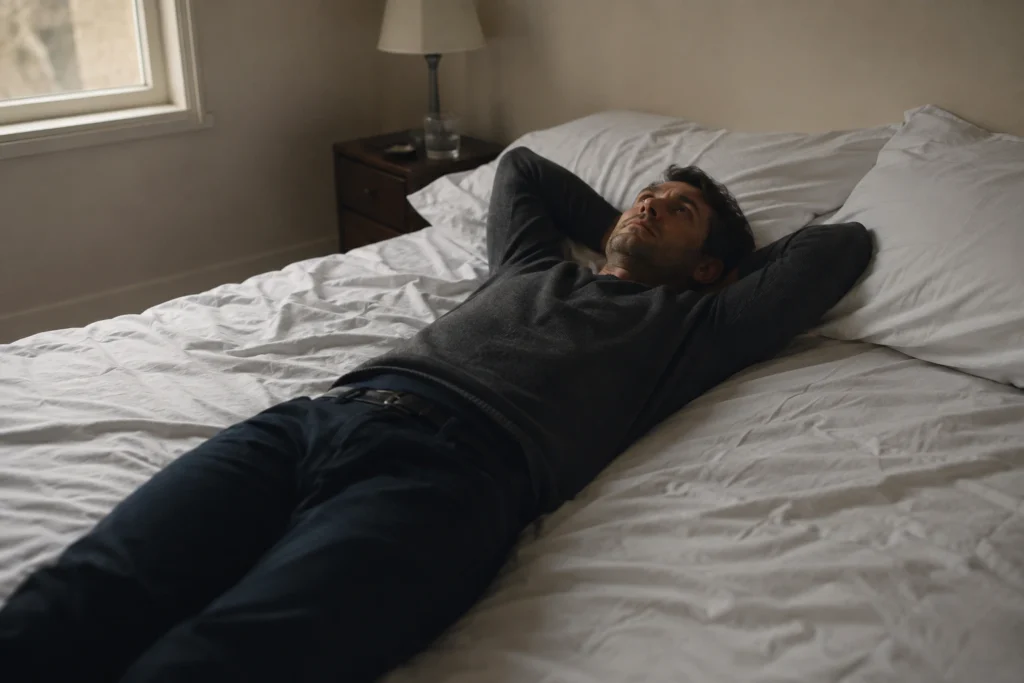
For years, James could not explain what happened to him after sex. Within minutes of finishing, something felt very wrong. Not guilt. Not sadness. Something physical. His muscles would start aching. His nose would stuff up. A heavy fog would roll into his head, making it hard to find words or remember simple things. Then the exhaustion would hit — the kind that kept him in bed for days.
He tried telling a doctor once. The doctor looked confused and said he was probably just coming down with something. James nodded and never brought it up again. He had learned that this was not something anyone knew how to talk about. And like James, millions of men feel sick after sex and are also so embarrassed to mention it to anyone.
What James did not know is that what happened to him has a name. It is called Post Orgasmic Illness Syndrome, or POIS. Like James, POIS is the reason why millions of men feel sick after sex. And while doctors still do not fully understand it, science is finally starting to catch up.
Before we go any further, POIS is not the same as another condition called Post-Coital Tristesse (PCT) or post-coital dysphoria (PCD) . PCT is when a person feels sad, empty, or anxious after sex, even when everything went well. It is mostly emotional. Research shows it affects around 41% of men and 46% of women at some point. It goes away on its own within a few minutes to a few hours.
POIS is completely different. It is physical. It feels like getting the flu after sex. It brings muscle pain, brain fog, and days or even months of feeling unwell. If what you feel after sex is more like illness than sadness, PCT is not your answer. Keep reading.
What Is POIS?
POIS is a condition where a person develops a group of physical and mental symptoms right after having an orgasm. The symptoms can start within seconds, get worse over hours, and last anywhere from two to seven days. Then they go away on their own, only to come back the next time.
Two Dutch researchers named Marcel Waldinger and Dave Schweitzer first described POIS formally in 2002. Back then, there were fewer than 60 documented cases in medical literature. Today there are more, but most experts agree that POIS is still widely undiagnosed. Many men are either too embarrassed to bring it up or have been dismissed by doctors so many times they stopped trying.
POIS mostly affects men, though women can experience something similar. In men, it is triggered by ejaculation, whether during sex, masturbation, or even a nocturnal emission during sleep. There is no way to avoid it by abstaining because the pattern repeats almost every single time.
The Symptoms
One of the reasons POIS is so hard to diagnose is that its symptoms look exactly like other common conditions. A man who shows up at a doctor’s office with fatigue, muscle pain, and trouble concentrating is much more likely to be tested for a virus than asked about his sex life.
During a POIS episode, a man may experience:
- Severe tiredness and weakness
- Muscle pain all over the body
- Flu-like symptoms including fever, chills, and sweating
- Trouble thinking clearly, memory problems, and sometimes difficulty speaking normally
- Stuffy or runny nose and watery eyes
- Headaches
- Mood changes including irritability and anxiety
- Sore throat
- Generally feeling unwell
In about 87% of men with POIS, symptoms start within 30 minutes of ejaculation. They usually peak between 12 and 48 hours later, then slowly get better over the following days. For some men it lasts two days. For others it means a full week or even months of lost time at work, missed plans, and relationships quietly falling apart because of something nobody has a name for.
Who Gets POIS?
POIS can affect men of almost any age. Documented cases include men between 21 and 61 years old, across different backgrounds and lifestyles worldwide.
There are two types. Primary POIS means symptoms started with the very first ejaculation, often during puberty. These men have never experienced orgasm without getting sick afterward. Secondary POIS develops later in life, sometimes after years of no symptoms at all.
The difference matters because the two types may have different causes and respond differently to treatment. But both types share one thing: a serious impact on quality of life. Men with POIS often cut back on sex to try to avoid episodes. Many avoid intimacy altogether. Their partners do not always understand what is happening, and most men carry this silently because they have no way to explain it.
What Causes POIS?
Nobody knows for sure yet. Researchers have several theories, each with some evidence behind it, and each pointing to a body that has somehow learned to react badly to its own chemistry.
- The allergic reaction theory is the most widely discussed. It suggests that the body treats certain proteins in a man’s own semen like foreign invaders. The immune system fires up a response that looks and feels like an allergic reaction or infection. This idea got a boost from a study where men with POIS were given a skin test using diluted samples of their own semen. A significant number showed a positive allergic response, which would be very unusual in a healthy person.
- The withdrawal theory suggests that orgasm causes the brain to release natural feel-good chemicals similar to opioids. When those chemicals quickly drain away, the body goes into a kind of withdrawal, explaining the fatigue, mood changes, and physical discomfort.
- The hormone theory points to how the body’s hormone system responds to orgasm. A 2025 case report from King Saud Medical City described a patient whose POIS improved when doctors targeted his testosterone levels. This suggests that for some men, hormonal disruption after orgasm may be playing a role.
- The nervous system theory suggests that POIS may be related to a brief breakdown in the part of the nervous system that controls automatic body functions like heart rate, digestion, and immune response. When that system misfires around the time of orgasm, it can trigger a chain of symptoms that affects the whole body.
The truth is that POIS may not be one condition with one cause. It may be a group of related conditions, and different men may get the same symptoms through very different biological pathways.
How is POIS Diagnosed?
There is no blood test or scan that confirms POIS. Instead, doctors use five criteria developed by researcher Marcel Waldinger. To be diagnosed with POIS, a person’s symptoms must:
- Start immediately or within a few hours of ejaculation
- Be consistent across almost all ejaculation events
- Not be explained by another condition
- Match a recognized group of physical or mental complaints
The biggest challenge is finding a doctor who knows enough about POIS to apply these criteria in the first place. A urologist is usually the best starting point, though some cases are handled by allergy specialists, immunologists, or hormone specialists depending on what the suspected cause is.
Living With POIS
No symptom list can fully describe what it feels like to live with a condition that attacks the most private part of your life.
Men with POIS often describe deep isolation, not just from partners who cannot understand why intimacy leads to days of illness, but from a medical system that has never known what to do with them. Many spend years bouncing between confused doctors before getting a diagnosis. Some never do.
Relationships suffer. Sexual confidence disappears. Some men describe a complicated relationship with desire itself, wanting closeness while dreading what their body will do afterward.
One documented case captures this vividly. A 36-year-old man whose POIS was so severe that it contributed to the breakdown of his marriage chose to completely avoid sexual activity, including masturbation, for five years. Even then, nocturnal emissions still triggered episodes. His story is not unique. It just happened to make it into a medical journal.
The size of POIS online communities, some with thousands of members, suggests the real number of people affected is far higher than the medical literature shows. For many men, these communities are the first place they ever read the words Post Orgasmic Illness Syndrome, and the first time they felt like someone understood.
Treatment Options
There is no all time cure for POIS yet. The research is still thin because so few patients have been formally studied. But several approaches have helped individual men manage their symptoms.
- Antihistamines and anti-inflammatory drugs. Antihistamines are allergy medications, and anti-inflammatory drugs like ibuprofen are common pain relievers. These address the allergic and inflammatory side of POIS and have brought real relief to some men, though they do not fix the underlying cause.
- SSRIs. These are a type of antidepressant that affect serotonin levels in the brain. Serotonin plays a role in how the body responds after orgasm, and some men with POIS have found SSRIs helpful.
- Niacinamide. This is a form of vitamin B3. A 2024 case report published in the medical journal Cureus described a 25-year-old man who had lived with POIS since age 17 and found major relief through niacinamide after other treatments had failed.
- Desensitization therapy. This is an experimental approach where a man receives injections of a very diluted version of his own semen over time, similar to allergy shots. The goal is to gradually teach the immune system to stop reacting. Early results have been promising, though this is only available in specialized medical settings.
- Hormonal treatment. The 2025 King Saud Medical City case report found success treating POIS using a combination of a drug called clomiphene citrate, which stimulates testosterone production, and niacinamide. This is one of the first documented cases of hormone-based POIS treatment and has opened a new direction for researchers.
Something important is emerging from the online communities where men with POIS connect and share their experiences. It is not in any medical journal yet, but it deserves attention.
A growing number of men who have gotten meaningfully better describe a pattern that points beyond the immune system. They say the state of the nervous system at the moment of orgasm seems to matter a lot.
One man, writing after seven years with POIS and near-complete recovery, claimed that when his nervous system was calm, ejaculation was processed normally. But when his nervous system was already locked into fear or stress mode, what scientists call fight, flight, freeze, or collapse, ejaculation pushed it over the edge. His body read orgasm as a threat instead of a natural event, and the resulting flood of inflammation and neurological disruption was what showed up as POIS symptoms.
This has not been proven in clinical trials. But it fits with the nervous system theory that researchers have already proposed. And it offers something that most medical literature does not: an actual direction toward recovery, not just symptom management.
The practices men in these communities have found most helpful include vagus nerve stimulation, deep belly breathing, somatic bodywork, and working through unprocessed emotions rather than numbing them with distractions. Several men report that as their nervous systems became calmer over time, through steady and patient inner work, their POIS symptoms gradually faded. The idea is not to be afraid or angry that this is happening to you. Just take a deep breath and get involved in activities that helps calm you central nervous system.
This is not a cure. It is not a medical recommendation. But for men who have found nothing helpful through conventional medicine, it may be the most meaningful path yet explored.
When to See a Doctor
If you recognize yourself in this article, if orgasm reliably leaves you with flu-like symptoms, mental fog, fatigue, or physical pain that lasts for days, the most important thing you can do is see a doctor and name the condition you suspect.
Ask to be referred to a urologist. Write down your symptoms, when they start after ejaculation, how long they last, and how consistently they happen. The more specific your information, the easier it is for a doctor to apply the Waldinger criteria and work toward a diagnosis.
You are not making this up. You are not alone. And medicine, slowly but surely, is starting to pay attention.
Do you have POIS or even PCD? If you don’t mind, do share how you are getting on with this condition you may be helping another sufferer who is reading or will read this article.
Frequently Asked Questions
Is POIS permanent?
Not necessarily. Some men have improved significantly with treatment. A growing number report meaningful recovery through nervous system regulation work over time. Because POIS is still not well understood, there is no guaranteed road to recovery, but improvement is possible and documented.
Can women get POIS?
Yes, though it is rare. Female Orgasmic Illness Syndrome (FOIS) was formally recognized in 2016. Women with FOIS experience similar symptoms after orgasm, though even less research exists on this version of the condition.
What is the difference between POIS and Post-Coital Tristesse?
PCT is emotional, a feeling of sadness or emptiness after sex that passes within hours. POIS is physical, flu-like illness, muscle pain, and brain fog that can last for days. They are separate conditions with different causes and different timelines.
Should I stop having sex or masturbating if I have POIS?
There is no single right answer. Some men choose long-term abstinence or cut back drastically to reduce episodes. Others manage symptoms as they come and do not want to give up intimacy. Some couples explore intimacy that does not involve ejaculation as a middle ground. What is important to know is that abstinence does not fix the underlying condition. Nocturnal emissions have still triggered episodes in men who are fully abstaining, as documented in medical cases. This decision is deeply personal and best made with a urologist who understands the condition.
Is there a connection between trauma and POIS?
Patient accounts suggest there may be. Several long-term POIS sufferers report that working through emotional trauma and calming their nervous system contributed significantly to their recovery. This has not been studied in clinical trials, but it aligns with the nervous system dysregulation theory that researchers have already proposed.
Is POIS dangerous?
POIS is not known to be life-threatening. But its impact on mental health, relationships, and everyday life can be severe. These consequences are real and deserve to be taken seriously by both patients and healthcare providers.
Can POIS be cured?
No established cure exists yet. Some men have found major relief through antihistamines, niacinamide, desensitization therapy, hormonal treatment, and nervous system work. Research is ongoing.
How common is POIS?
The exact number is unknown. Fewer than 500 cases have been formally documented in medical literature, but the size of POIS online communities suggests the real number is much higher. Many men with POIS never receive a formal diagnosis.
Does POIS affect fertility?
POIS itself is not known to directly affect fertility. Some case reports have noted related conditions like varicocele, which is an abnormal enlargement of veins in the scrotum that can reduce sperm production. If you have concerns about fertility, speak with a urologist.
Can POIS be confused with other conditions?
Yes, very easily. Its symptoms overlap with chronic fatigue syndrome, depression, anxiety disorders, chronic prostatitis, and the flu. This is one of the main reasons POIS stays so widely undiagnosed.
What kind of doctor treats POIS?
A urologist is usually the best first stop. Depending on what is suspected as the underlying cause, you may also be referred to an allergy specialist, immunologist, or hormone specialist.
References
Abdessater M, Elias S, Mikhael E, Alhammadi A, Beley S. Post orgasmic illness syndrome: what do we know till now? Basic and Clinical Andrology. 2019 Sep 3;29:13. doi: 10.1186/s12610-019-0093-7. PMID: 31508233; PMCID: PMC6721082.
Alanazi FK, et al. Post-orgasmic Illness Syndrome: A Case Report. Cureus. 2024. DOI: 10.7759/cureus.61494.
Alrebdi NA, et al. Hypogonadal Rescue in Post-orgasmic Illness Syndrome: A Case Report. Cureus. 2025. DOI: 10.7759/cureus.92552.
Herman and Wallace Pelvic Rehabilitation Institute. Post-Orgasmic Illness Syndrome. The Pelvic Rehab Report. 2022.
Nguyen HMT, Bala A, Gabrielson AT, Hellstrom WJG. Post-Orgasmic Illness Syndrome: A Review. Sexual Medicine Reviews. 2018 Jan;6(1):11-15. doi: 10.1016/j.sxmr.2017.08.006. Epub 2017 Nov 8. PMID: 29128269.
National Institutes of Health, Genetic and Rare Diseases Information Center. Postorgasmic illness syndrome. rarediseases.info.nih.gov. Available at: https://pubmed.ncbi.nlm.nih.gov/33008782/
Pierce H, Fainberg J, Gaffney C, Aboukhashaba A, Khan A, Kashanian J. Postorgasmic illness syndrome: potential new treatment options for a rare disorder. Scandinavian Journal of Urology. 2020;54(1):86-88. https://doi.org/10.1080/21681805.2019.1704861
Schweitzer RD, O’Brien J, Burri A. Postcoital Dysphoria: Prevalence and Psychological Correlates. Sexual Medicine. 2015 Dec;3(4):235-243. https://doi.org/10.1002/sm2.74
Su H, Lu Y, Ma C, Li H. Post-orgasmic illness syndrome accompanied with testosterone deficiency: a case report. Journal of Men’s Health. 2022;18(6):1-5.
Waldinger MD, Schweitzer DH. Postorgasmic illness syndrome: two cases. Journal of Sex and Marital Therapy. 2002 May-Jun;28(3):251-5. doi: 10.1080/009262302760328280. PMID: 11995603.
This article is for informational purposes only and does not constitute medical advice. Always consult a qualified healthcare professional regarding any medical condition.