There is a specific kind of frustration that comes from doing everything right and still failing. Taking your iron supplements or tablets every day. Eating your spinach. Adding vitamin C to improve absorption. Going back to the doctor three months later and sitting across from a blood test that says your levels are still low.
You are not imagining it.
The supplements are genuinely failing you. And understanding why they fail, and what actually works for the people they fail most, may be the most practically useful thing you read about iron deficiency this year.
This article is not against iron supplements. For mild and uncomplicated iron deficiency, they work well for many people. This article is for the ones they do not work for. The people with chronic anemia that keeps returning. The people whose bodies react so badly to iron tablets that they have to stop taking them. The people who have been told their levels are fine when they feel anything but fine. And above all, the people who want to feed their bodies with the most bioavailable form of iron that their bodies can absorb without troubling their digestive organs.
If that is you, keep reading.
Why Your Iron Supplement Is Failing You — And Why Blood Does Not
To understand why iron supplements fail, you need to understand one hormone that most doctors never mention when they hand you the prescription. It is called hepcidin. And it is the body’s master regulator of iron absorption.
Hepcidin is produced by the liver. Its job is to control how much iron enters the bloodstream by blocking the door through which dietary iron passes. When hepcidin levels are high, that door closes. Iron from food and supplements sits in the intestine and passes out of the body unused. You swallow the supplement. The hepcidin blocks it. Your levels stay low. Your doctor increases the dose. The hepcidin blocks that too.
Here is the critical part. Hepcidin rises in response to two things. High iron stores and inflammation. In a body dealing with chronic stress, a compromised gut, a fatty liver, or any ongoing inflammatory condition, hepcidin stays elevated regardless of how iron-deficient the person actually is. The inflammation is telling the liver to keep iron locked away. And the liver obeys.
But hepcidin is not the only obstacle. Non-heme iron from supplements and plant sources must also be dissolved in the stomach, converted into a specific chemical form, and then transported through the intestinal wall by a protein called DMT1. Every step of this process can be blocked. Phytates from grains and legumes eaten at the same meal can block it. Calcium competes with it. An inflamed gut slows it. A fatty liver disrupts the conversion. The system has many points of failure and every one of them is common in the people whose iron deficiency is most severe.
Think of it this way. Non-heme iron from supplements knocks on the door that hepcidin has locked. Heme iron from blood walks through a different door entirely.
The iron in animal blood is heme iron. Specifically it is the iron carried inside hemoglobin, the protein that gives blood its red color and its oxygen-carrying capacity. Heme iron is absorbed intact into the intestinal cells through a receptor-mediated pathway that operates largely independently of hepcidin. It does not need to compete with dietary inhibitors. It does not depend on stomach acid levels or the efficiency of conversion enzymes. It arrives at the intestinal wall in a form the body already recognizes and knows how to process, and it enters the bloodstream without the obstacles that defeat non-heme iron at every turn. The absorption numbers confirm the difference. Heme iron from animal sources absorbs at 25 to 30%. Non-heme iron from plant foods and supplements absorbs at 3 to 5%. Research specifically looking at red blood cell concentrate, which is the form of iron most concentrated in whole blood, found heme iron to be twice as bioavailable as standard heme iron preparations. A supplement marketed as bioavailable delivers iron that the body may or may not absorb depending on the state of its gut, its liver, and its inflammation levels. Blood meal delivers iron in a form that bypasses the very systems that are failing in the people who need iron most.
This is not just a theoretical argument about nutrition. A peer-reviewed study conducted across all 13 provinces of the Puno region of Peru found that iron deficiency accounted for only 11% of total anemia cases in the population studied. the study reported that Iron supplementation and iron-fortified food programs had not substantially reduced anemia prevalence. Recognizing this, the WHO recommended in 2023 that anemia management strategies should be more comprehensive, addressing multiple contributing factors beyond iron deficiency alone. A supplement that delivers only iron into a body deficient in B12, copper, folate, and the full nutritional matrix that iron depends on was always going to fall short.
Blood meal does not fall short in the same way.
It arrives with something no supplement can replicate.
What no iron supplement, oral or intravenous, can replicate is what whole blood brings alongside its iron. Blood is not a single nutrient delivery system. It is a complete biological matrix. The same meal that floods your system with highly bioavailable heme iron also delivers vitamin B12, the very nutrient your bone marrow needs to manufacture the red blood cells that will carry that iron. It delivers copper, without which the enzyme responsible for loading iron onto transferrin and sending it through your bloodstream cannot do its job. No matter how much iron you absorb, without adequate copper it cannot be mobilized. It delivers folate, zinc, and a full spectrum of proteins in ratios shaped by millions of years of biology, not a laboratory formulation decision.
The concentration advantage is equally striking. A study conducted at the University of Toronto developed bovine blood powder as a food-based strategy specifically for combating iron deficiency anemia in resource-poor developing countries. Chemical analysis of the processed blood powder found a heme iron concentration of 195.46 milligrams per 100 grams of powder. Bovine liver, which is widely considered one of the most iron-rich food sources available and is the food most commonly recommended by doctors for iron deficiency, contains approximately 17 milligrams of iron per 100 grams. Blood contains more than ten times the iron concentration of liver. The food that health professionals point to as the gold standard dietary iron source is not in the same category as blood when the numbers are placed side by side.
Research has shown that the person with chronic anemia is rarely deficient in iron alone. They are deficient in the entire nutritional ecosystem that iron depends on. And blood delivers that entire ecosystem in one bowl.
A supplement gives you one instrument. IV iron gives you one instrument delivered faster. Blood gives you the orchestra.
When The Supplement Makes Things Worse
Iron supplements, particularly ferrous sulfate which is the most commonly prescribed form, are among the most side-effect-prone medications in routine use. A systematic review and meta-analysis of 43 randomized controlled trials covering 6,831 adult participants found that ferrous sulfate supplementation significantly increased the risk of gastrointestinal side effects compared to both placebo and intravenous iron, with an odds ratio of 3.05 compared to intravenous iron.
Common side effects include severe constipation, nausea, stomach cramps, diarrhea, and inflammation of the gut lining. These happen because ferrous sulfate releases free iron ions that trigger oxidative stress in the gut, producing free radicals that damage the intestinal lining and disrupt the gut microbiome.
But there is one side effect that most iron supplement articles barely mention, and that many people who have experienced it never report because either they did not connect their symptoms to the supplement they were taking, or they assumed nobody would take them seriously. Heart palpitations. A racing, pounding heartbeat that arrives shortly after taking the tablet and makes the person genuinely frightened.
This happened to me every single time I tried an iron supplement. Ferrous sulfate. Ferrous gluconate. Even the bisglycinate form that everyone described as the gentler option. Within an hour of taking the tablet my heart would pound so hard and so fast that I would sit very still waiting for it to pass. I tried different brands, different doses, different timings. The response was the same every time.
Iron deficiency itself causes a sensation of a thumping heart because the heart works harder to pump oxygen-depleted blood around the body. In a body with an already compromised cardiovascular and nervous system, the oxidative stress that ferrous iron causes in the gut can compound that response significantly. I was not being dramatic.
My body was being precise.
Eventually I stopped trying.
The deficiency persisted.
I kept searching.
And what I found was not in any supplement aisle. It was in a tradition my own culture had practiced for generations and that science, it turned out, had been quietly validating all along.
What Blood Meal Is And Who It Is For
Let me be clear before going further. This section is not saying that everyone with iron deficiency should eat animal blood. For mild and uncomplicated iron deficiency, conventional supplementation works well for many people and remains the appropriate first approach.
What this section is saying is more specific than that.
For certain groups of people, blood meal deserves serious consideration as a dietary intervention. For people with chronic anemia that has not responded to supplementation over an extended period. For people whose bodies simply cannot tolerate iron supplements regardless of the formulation they try. For people whose inflammatory conditions are driving elevated hepcidin and blocking oral iron absorption at the intestinal wall regardless of how much they consume.
And for everyone else, this section is saying something simpler. If you can incorporate blood meal into your diet regularly, it will take care of your daily iron needs and the full cofactor ecosystem that iron depends on more effectively than almost anything else available to you as food. Not because it is exotic or unconventional. But because it is what the body was designed to receive, delivered in the form and the company it was designed to receive it in.
To the people with chronic anemia that has not responded to iron supplementation over an extended period, particularly those with systemic inflammation or gut compromise that elevates hepcidin and blocks oral iron absorption. For you, the problem is not how much iron you are consuming. The problem is that the door through which supplemental iron enters the bloodstream has been closed by the body’s own chemistry. Orthodox medicine addresses this with intravenous iron. When oral supplements fail because hepcidin or other causes are blocking absorption at the intestinal wall, IV iron bypasses the gut entirely and delivers synthetically produced iron directly into the bloodstream. It works faster. But it requires a doctor, a clinic visit, needles, and catheters. It is not something you do at home on a Tuesday morning. And it delivers iron alone, without the biological cofactors the body needs to actually put that iron to work.
Blood meal addresses the same problem through a different and in many respects more complete mechanism. Heme iron from whole blood is absorbed through a receptor-mediated pathway that operates largely independently of hepcidin. It does not skip the gut the way IV iron does. But it uses a completely different entrance that chronic inflammation has not closed. Non-heme iron from supplements knocks on the door that hepcidin has locked. Heme iron from blood walks through a different door entirely.
And unlike IV iron, blood meal does not arrive alone. The same meal that delivers highly bioavailable heme iron also delivers the vitamin B12 your bone marrow needs to manufacture red blood cells, the copper without which iron cannot be mobilized through the bloodstream, and the folate and zinc that complete the nutritional picture. The person with chronic anemia is rarely deficient in iron alone. They are deficient in the entire nutritional ecosystem that iron depends on.
What Governments And Scientists Already Know
The institutional case for animal blood as an iron intervention did not begin with any modern health organization. It began in 1890 in Switzerland, when a physician named Dr. Adolf Hommel created a preparation of bovine blood and egg yolk specifically to treat iron deficiency anemia in malnourished industrial workers. During World War One, doctors observed that wounded soldiers and malnourished children recovered significantly faster when given this preparation. The Soviet Union adopted it in the 1920s, initially as military nutrition for Red Army soldiers, then as a pharmaceutical product delivered to children through schools and pharmacies across the country. Soviet doctors prescribed it specifically for children with low hemoglobin. The product was called Hematogen, from the Greek meaning blood-forming. Each bar contained at least five percent cow’s blood. Most Soviet children consumed it happily without knowing what they were eating. Hematogen is still sold in Russia, Ukraine, and other former Soviet countries today and is available in the United States and Canada.
The use of animal blood in medicine extends well beyond nutrition. A pharmaceutical biotechnology lecture from the National University of Pharmacy, Ukraine documents that drugs derived from human and animal blood are used clinically for different reasons. The consumption of animal blood meal is not a folk remedy sitting outside medicine. It is a raw material that pharmaceutical science has been processing into clinical drugs for over a century. What your kitchen pot does with whole blood is less refined than what a pharmaceutical laboratory does with bovine plasma. The biology at work is the same.
When the WHO did establish its nutrition guidelines, the science it built them on told the same story. The WHO’s 2023 guidelines on complementary feeding are unambiguous. Animal source foods including meat, fish, and organ meats should be consumed daily by children, and when these foods are excluded, iron needs in terms of iron, zinc, and vitamin B12 simply cannot be met through any other means. Blood is the most concentrated animal source of heme iron that exists. The WHO built its guidelines on the same biological reality that Dr. Hommel acted on in 1890 and that the Soviet government turned into a national program in the 1920s. The science was never in dispute. What governments chose to do with it simply varied.
Peru chose to name it explicitly and build policy around it. The Ministry of Health officially recommended animal blood alongside organ meats as a dietary intervention for children from six months of age. When that policy was implemented through national programs, anemia rates in children dropped by nearly 70% and hemoglobin levels rose measurably across all age groups studied. Peru did not just eat what its ancestors ate. It used that knowledge to solve a national public health crisis.
And the WHO noticed. In 2019, at the Seventy-second World Health Assembly in Geneva, the WHO awarded Peru its most prestigious health recognition, the Sasakawa Health Prize, specifically for its success in tackling childhood anemia. The institution whose guidelines pointed toward animal source foods as essential for children stood in Geneva and gave a prize to the country that had taken that science most seriously and acted on it most completely.
The WHO did not just tolerate Peru’s blood meal policy. It celebrated it on the world stage.
But Peru did not stop at policy. Its researchers took the science further. In 2019 a peer-reviewed study presented at the IEEE Sciences and Humanities International Research Conference developed and tested gummies made from guinea pig blood combined with the Andean fruit Physalis peruviana for children with anemia in Huanuco, Peru. The gummies worked. A government that officially recommended blood as food as reported by the BBC also had scientists in laboratories developing new blood-based formulations for children. That is not a country that stumbled onto a traditional remedy. That is a country that understood the science and acted on it at every level simultaneously.
Also, a 2023 peer-reviewed review published in Current Research in Nutrition and Food Science then examined slaughterhouse blood and its compounds systematically, documenting the science behind blood processing and its application in formulating the next generation of iron-rich nutritional food products. Blood was no longer just being eaten as tradition. It was being studied in food science laboratories by researchers designing tomorrow’s functional foods around what traditional cultures had understood for centuries.
By 2025 that momentum had become a fully coordinated national program. A peer-reviewed study published in Global Health Action documented how Peru’s Cuna Mas national childcare program actively facilitated the consumption of iron-rich animal source foods including chicken blood in young children as part of a structured national anemia prevention strategy. Dietary blood and iron supplementation were explored simultaneously because the program understood from the beginning that both serve different people in different situations. That dual approach is the spirit of this article too.
The convergence of all of this evidence points in one direction.
The WHO built its nutrition guidelines on the same biological reality this article documents — that animal source foods are irreplaceable for iron, and that when they are excluded, the need cannot be met through any other means. Peru heard that and went further. It adopted animal blood as an explicit national policy, implemented it through childcare programs across the country, watched anemia rates fall by around 80%, and was awarded the WHO’s own Sasakawa Health Prize for the results. What a Swiss physician discovered in 1890, the Soviet Union turned into a 135-year institutional intervention. What traditional cultures across Nigeria, Korea, Britain, Finland, China, Hungary, and Peru had understood for generations, peer-reviewed science has now confirmed in the language of absorption rates, hepcidin pathways, and randomized trials.
This is not coincidence. It is not cultural habit being mistaken for medicine. It is the same biology, recognized independently across time and culture, finally being named in the language of science for what it has always been.
What Every Culture Already Understood
This is not a new idea wearing scientific language. It is an old idea that science is finally catching up with.
Here is something worth pausing on before reading further. Most people reading this article have already eaten blood as food at some point in their lives. They simply did not know it. The BBC reported on Peru’s use of animal blood for childhood anemia. Researchers at IEEE conferences are publishing papers on guinea pig blood gummies for children. A 133-year-old Swiss formulation made from cow’s blood is sold in pharmacies across the former Soviet Union and available on Amazon in the United States. And millions of British people sit down to black pudding at breakfast every week without giving it a second thought.
Blood as food is not unusual. It is everywhere. It simply goes by different names in different places, and most people eating it have no idea what they are actually eating.
The section below documents how blood is prepared and consumed across cultures worldwide, not as unusual or medicinal practice, but as ordinary everyday food that has been part of human nutrition for as long as humans have kept animals. Once you see it this way, the idea of using it intentionally for iron becomes not just less unusual. It becomes obvious.
How Blood Is Prepared As Food Around The World
Blood has been prepared as food across cultures for centuries. But before documenting those preparations, it is worth noting that some of the recipes have changed significantly from their original form, adapted over generations to suit sweeter and more commercially appealing tastes. The therapeutic value of any blood-based preparation lives in its original simplicity. The further a preparation drifts from that simplicity, the less it delivers of what made it valuable in the first place.
The Russian Hematogen is the most documented example of this drift. Originally developed in 1890 by Swiss physician Dr. Adolf Hommel as a simple preparation of bovine blood and egg yolk specifically to treat iron deficiency anemia, it was adopted by the Soviet Union in the 1920s as a pharmaceutical product prescribed by doctors for children with low hemoglobin. A 2016 peer-reviewed study published in Polzunovsky Vestnik, Малишевский А.А., Тихонов С.Л., Тихонова Н.В. — Разработка и оценка качества продукции специализированного назначения, documented what commercial production had done to it. The modern version contains 87 grams of carbohydrates per 100 grams. The blood albumin that constitutes the active therapeutic ingredient accounts for just 2.5 to 5 percent of the bar. The researchers found the mineral content so diluted that they had to develop an entirely new dietary supplement to restore what the sugar had displaced. The medicine had become candy.
This pattern is worth keeping in mind as you read through the preparations below. Some remain close to their original form. Others have been sweetened and refined for modern palates. Where blood is prepared simply, freshly, and without excessive addition, it delivers what generations of cultures instinctively understood it to deliver. With that in mind, here is how blood has been prepared as food around the world.
United Kingdom and Ireland — Black Pudding
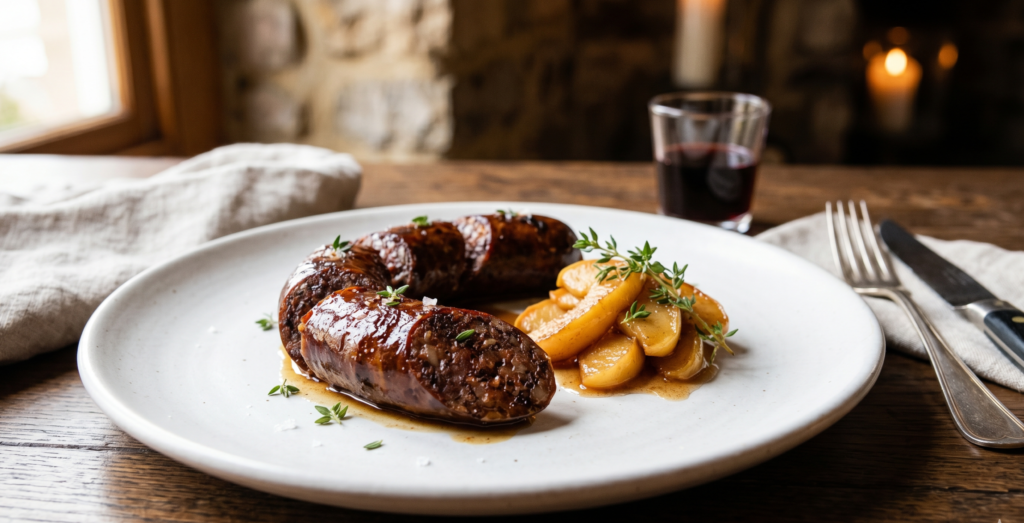
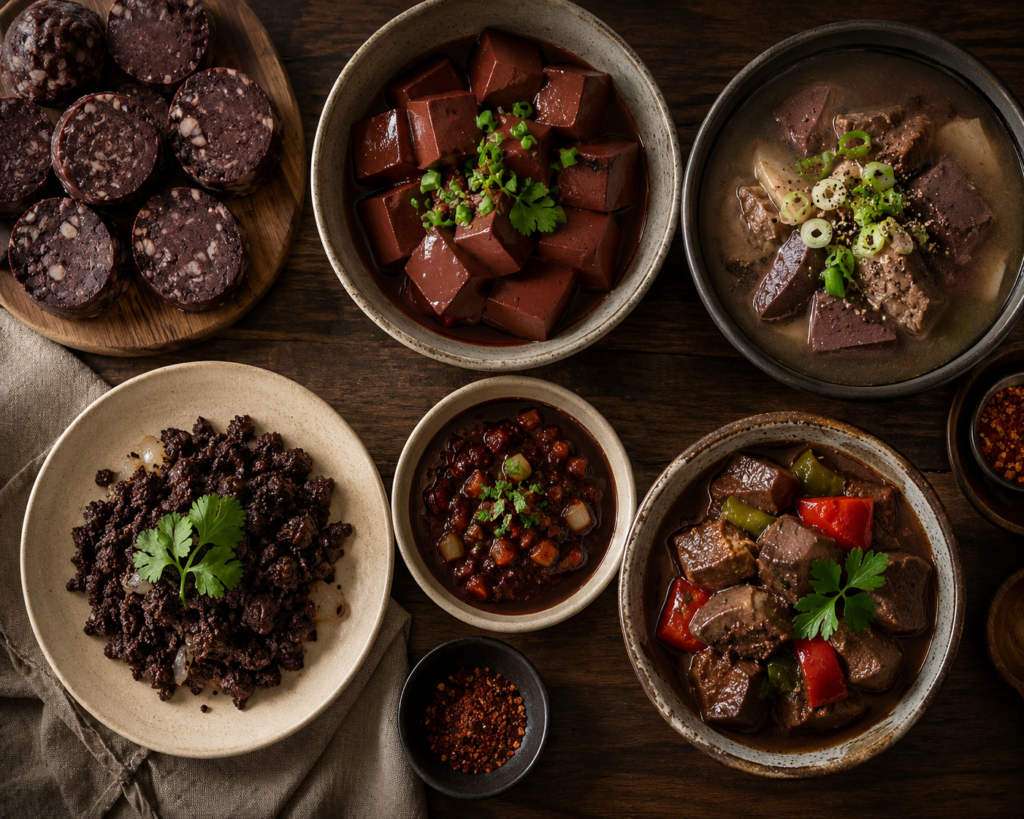
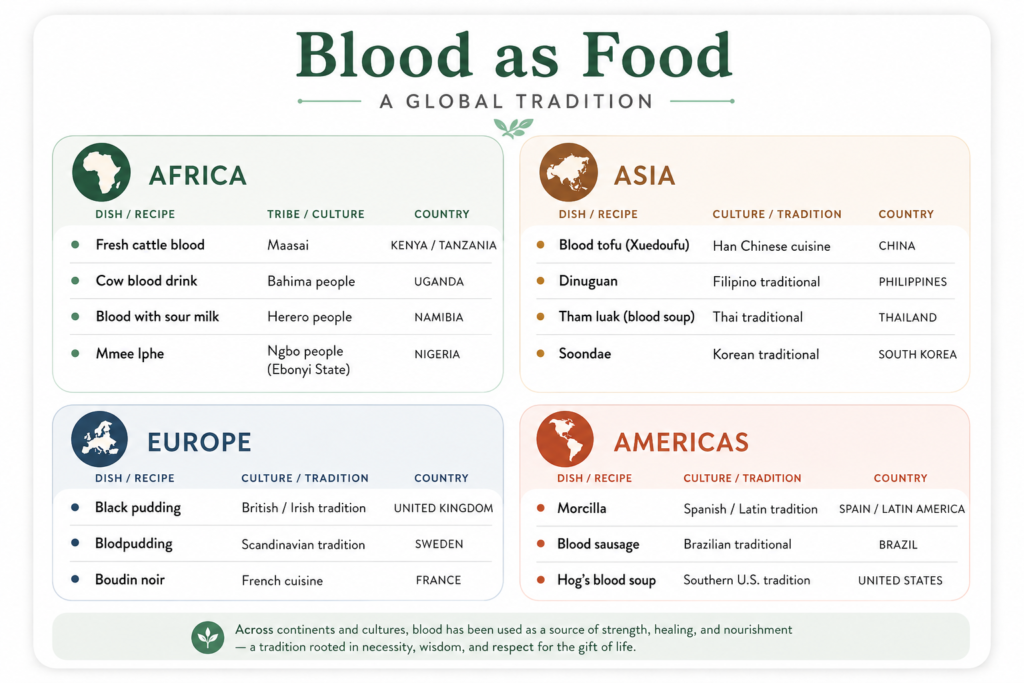
Black pudding is one of the most widely consumed blood foods in the world, eaten by millions of British and Irish people every week as part of a full cooked breakfast. It is made from pig’s blood mixed with oatmeal, fat, onion, and spices, then packed into a sausage casing and cooked. Most people who eat it have no idea it is a blood product. The name and the dark color disguise its origin so effectively that it has become simply a breakfast item rather than a medicinal food. Yet the iron it provides is heme iron from blood, absorbed by the body at the same favorable rate that makes blood the most bioavailable iron source available. The friend who has been eating a full English breakfast every Sunday has been eating one of the richest sources of bioavailable iron on the planet. They just called it black pudding.
China — Blood Tofu (Xuedoufu)
In China, congealed pig or duck blood is cut into cubes and cooked in soups and stir fries. It is called blood tofu because of its soft firm texture similar to tofu. It is sometimes called liquid meat in Chinese culinary tradition, a name that captures its nutritional profile accurately. Blood tofu is a standard ingredient in hotpot restaurants and street food stalls across China and is consumed without any association with unusual practice. It is simply food.
Korea — Seonji-guk
Seonji is cattle blood that has been allowed to coagulate and then sliced into thick pieces. It is simmered in a clear broth with dried radish greens to make a warming soup called seonji-guk. This soup is particularly popular as a hangover remedy and restorative food in Korea, which reflects an intuitive understanding of its replenishing nutritional properties.
Philippines — Betamax and Dinuguan
In the Philippines, chicken blood is congealed, cut into rectangular pieces, and grilled on skewers as a popular street food affectionately nicknamed Betamax because of its rectangular shape resembling the old video cassette. Separately, dinuguan is a rich stew made from pork blood cooked with vinegar, garlic, and chili. Both preparations are everyday foods eaten across the Philippines without any association with unusual dietary practice.
Hungary — Hagymásvér
On pig slaughter day in Hungarian villages, the fresh blood collected during slaughter is fried immediately with onions and paprika and served as breakfast. This is called hagymásvér, which translates literally as onion blood. It is a tradition passed down through generations and reflects the nose-to-tail approach to animal use that characterized rural food culture across Europe before industrialization removed most people from the realities of where their food came from.
France — Boudin Noir
Boudin noir is the French blood sausage, made from pig’s blood, fat, onions, and spices. It is eaten across France as a main course, often pan-fried and served with apple sauce. In the same culinary tradition, the classic French dish coq au vin uses chicken blood to thicken and enrich the sauce. French cuisine, widely regarded as among the most sophisticated in the world, has integrated blood into its preparations for centuries.
Russia — Hematogen Bars
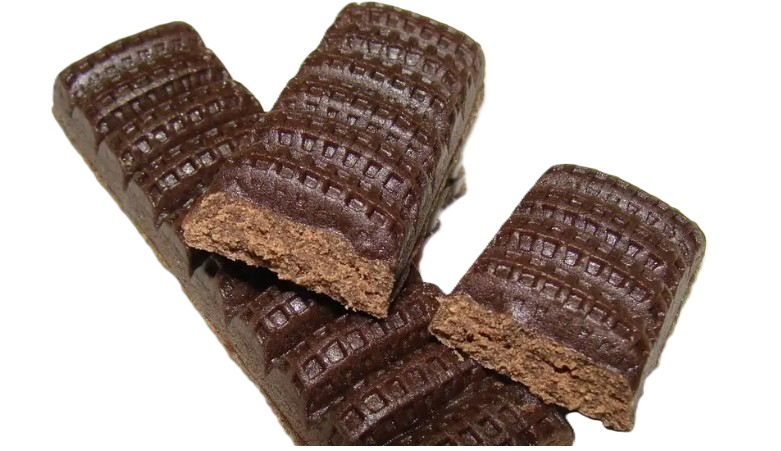
Russia’s contribution to this tradition came not from a kitchen but from a pharmacy. Soviet doctors prescribed it for low hemoglobin. Children ate it happily, largely unaware of what they were consuming. The connection to anemia treatment was always the point.
The original formula was usually at least 5% bovine blood, sweetened with beet sugar, condensed milk, and syrup just enough to make it palatable, not enough to obscure its therapeutic purpose. Hematogen is still sold in pharmacies and grocery stores across Russia and the former Soviet states today. But the modern commercial versions tell a different story. Pharmaceutical formulation data from the National University of Pharmacy documents a contemporary composition in which food albumin — the bovine blood — has fallen to just 2.5% of the bar, while sugar now makes up 22.8% and condensed milk a further 19.9%. The medicine became the vehicle for the sweetener.
Nigeria — Ngbo People, Ebonyi State
The Ngbo people of southeastern Nigeria sieve the plasma from fresh animal blood and boil it inside a thoroughly washed small intestine. The intestine acts as a natural casing that holds the blood together during cooking, similar to a sausage casing. The result is a firm protein-rich preparation eaten as part of a main meal. Some people choose to use whole blood rather than just the plasma to maximize the heme iron content concentrated in the red blood cells.
Peru — Sangrecita
Sangrecita is a traditional Peruvian dish made from fried chicken blood cooked with Welsh onion, garlic, chili, and cumin. It is one of the most affordable and nutritious dishes in the Peruvian diet and is specifically recommended by the Peruvian government as a dietary intervention for childhood anemia. The name means little blood and it is eaten across the country as an everyday meal rather than a medicinal preparation, though the nutritional intention behind its cultural role has always been understood.
India — Tamil Nadu — Irattha Poriyal
In the Kongu Nadu region of Tamil Nadu, lamb blood is stir-fried with ginger, garlic, dried red chili, curry leaves, and spices to make irattha poriyal. It is eaten as a side dish alongside rice and is a common breakfast preparation in communities where lamb is regularly consumed. Like most blood preparations across cultures, it is eaten without ceremony. It is simply part of the food culture.
Finland — Veriohukainen
Blood pancakes are a traditional Finnish food made from pig blood, milk, flour, and a little molasses, then fried like a pancake. They are eaten with lingonberry jam in the same way ordinary pancakes are eaten with syrup. Like black pudding in Britain, blood pancakes in Finland are a completely normalized part of the food culture, eaten by families across generations without any sense that they represent an unusual dietary practice.
What All Of These Have In Common
Every preparation across every culture follows the same basic principle. Fresh blood from a healthy animal, combined with other ingredients, and cooked through low to medium heat. The cooking matters for food safety. The freshness matters for nutritional quality. The sourcing from a healthy well-fed animal matters for both.
The diversity of preparations also makes the practical point clearly. There is no single correct way to use blood as food. Every culture found the preparation that suited its ingredients, its cooking traditions, and its palate. Your version of this is determined by what is available and culturally appropriate in your context. The iron arrives with the same bioavailability regardless of whether it is in a British breakfast sausage, a Korean soup, a Peruvian street food, or a Nigerian preparation inside a small intestine.
My Personal Experience
I had been iron deficient for a long time before I understood why my supplements were failing. The tinnitus was the loudest symptom, a relentless ringing that research later confirmed is associated with nearly four times the risk in women with iron deficiency anemia. I was also exhausted in a way that sleep did not fix, and my hormonal health was deteriorating in ways I could not understand.
After the heart palpitations with every iron supplement I tried, I stopped supplementing and started researching. What I found pointed consistently toward heme iron from animal sources as the most bioavailable option for people whose bodies were not responding to conventional supplementation.
I sourced the blood of a grass-fed healthy donkey and prepared it inside a thoroughly washed small intestine of the animal. I used whole blood rather than just the plasma because my body specifically needed the iron concentrated in the red blood cells. The plasma alone would not have delivered heme iron in the same concentration.
I will not pretend this is an approach everyone will find comfortable. But I will say what happened. My iron levels responded in ways that years of supplementation had not produced. The tinnitus quieted. The exhaustion began to lift. My hormonal health began to recover along pathways that had been blocked for a very long time.
Whatever blood meal is available and culturally appropriate in your context, the principle is the same. Find a source from a healthy well-fed animal. Prepare it hygienically. Cook it thoroughly. Use it consistently. Give your body the iron it has been asking for in the form it was designed to receive.
👉 Read more on managing hormones and thyroids here
Frequently Asked Questions
Not everyone needs to eat animal blood to address iron deficiency. But for the people who do, knowing how to do it safely and effectively matters. This section answers the practical questions directly.
Who should consider eating blood meal?
Blood meal is most appropriate for three groups of people. The first is anyone with chronic iron deficiency anemia that has not responded adequately to supplementation over at least three months of consistent use. The second is anyone who cannot tolerate iron supplements because of severe side effects including heart palpitations, severe gastrointestinal distress, or allergic reactions. The third is anyone whose underlying inflammatory condition is driving elevated hepcidin and blocking oral iron absorption at the intestinal wall regardless of how much they consume.
Who should be cautious of eating blood meal?
As a food, blood meal is as safe for general consumption as any other animal product eaten across cultures worldwide. British families eat black pudding at breakfast. The Ngbo people of Ebonyi State eat Mmee Iphe as protein. Korean families order seonji-guk at restaurants. None of them require a doctor’s note to do so.
There is however one group of people who should be genuinely careful.
People with hemochromatosis, which is a genetic condition where the body absorbs and stores too much iron, should not regularly consume iron-rich foods including blood without medical supervision. The body’s inability to regulate iron properly in this condition means that consistently high iron intake can cause organ damage over time. If you have been diagnosed with hemochromatosis or have a family history of it, check your iron levels before making blood meal a regular part of your diet.
For everyone else, blood meal is food. Nourishing, iron-rich, culturally validated food with a 135-year institutional track record. Eat it the way the Ngbo people eat it. The way the British eat black pudding. The way the Peruvian government recommends feeding it to children from six months of age. Without anxiety and without a prescription. But like every other food, eat moderately
What animal source can I get the most heme iron?
Any healthy well-fed animal whose blood can be collected hygienically at the time of slaughter is appropriate. Grass-fed animals are preferable because their nutritional profile is richer and their inflammatory burden lower. Chicken blood, beef blood, goat blood, donkey blood, and pork blood, duck blood, donkey blood have all been used across cultures for exactly this purpose. The two factors that matter most are hygiene and freshness. Blood that is fresh, handled cleanly, and cooked well is safe. Blood that has been stored without refrigeration or handled carelessly is not.
How to prepare blood meal for humans
You don’t actually need to get your own animal blood to make your meal. You can just take the reciepes already developed by other cultures. If you are in Europe try the English black pudding or the French
Boudin noir. Check out the different recipes that we discussed above. However, if you want to make yours all by yourself, it is fine. However, note that blood should always be used fresh and prepared hygienically. Boiling is the safest and most effective preparation method. The traditional Ngbo preparation of boiling blood inside a thoroughly washed small intestine, as practiced by the Ngbo people of Ebonyi State in southeastern Nigeria, is both effective and safe when the intestine is cleaned properly before use. Blood can also be added directly to soups and stews, cooked in a pan with onions and spices, or prepared in any of the cultural methods documented earlier in this article. What it should never be is raw. Raw blood carries a meaningful risk of bacterial contamination and should not be consumed regardless of the source.
Out of the whole blood or plasma which one guarantees the most heme iron?
The heme iron in blood is concentrated in the red blood cells, specifically inside the hemoglobin protein that gives blood its red color. Whole blood therefore provides significantly more bioavailable iron than plasma alone. Plasma is the liquid portion of blood after the red blood cells have been separated out. It provides protein and some nutritional benefit but far less iron. If your cultural tradition uses plasma specifically, that preparation still has value. But if your primary goal is addressing iron deficiency, whole blood is the more effective choice.
How often should animal blood meal be eaten?
Two to three meals incorporating blood per week is a reasonable and sustainable starting point for most people. Rebuilding iron stores takes time regardless of the source. Consistency across weeks and months matters far more than large single amounts consumed occasionally. Think of it the way you would think about any therapeutic dietary change — steady, regular, and patient.
Is eating animal blood safe?
Blood from healthy animals prepared hygienically and cooked thoroughly is safe for most people. The key requirements are sourcing from a healthy animal, collecting and preparing hygienically, and cooking thoroughly rather than consuming raw. Blood that is fresh, properly handled, and cooked presents no greater food safety risk than other animal products.
Why did my iron tablets cause heart palpitations?
Iron deficiency itself causes palpitations because the heart works harder to compensate for reduced oxygen delivery. Adding ferrous iron supplements to an already inflamed and compromised system can trigger oxidative stress responses that intensify cardiovascular symptoms in sensitive individuals. If you experience palpitations from iron supplements, stop taking them and discuss alternatives with your doctor. Do not push through this symptom.
Why does inflammation make iron deficiency worse?
Inflammation stimulates the liver to produce more hepcidin. Elevated hepcidin blocks iron from entering the bloodstream from the intestine. It also traps iron inside storage cells where it cannot be used for red blood cell production. This is called anemia of inflammation. In this situation the body may have adequate iron stores it simply cannot access, or may be genuinely deficient but unable to absorb supplemental iron. Addressing the underlying inflammation is as important as addressing the iron itself.
How long before I notice a difference if I use blood meal for iron deficiency treatment?
Red blood cells live for approximately 120 days. Full restoration of iron levels and hemoglobin takes time regardless of the iron source. However symptoms related to iron deficiency such as fatigue, breathlessness, and tinnitus may begin to improve almost immediately as the body’s immediate iron needs are met even before stores are fully replenished.
Should I stop taking my iron supplement and switch to blood meal?
Not without discussing it with your doctor. If you are currently taking prescribed iron supplementation, any change to your iron management approach should be made in partnership with a healthcare provider. This article introduces blood meal as a documented, culturally validated, and scientifically supported option for people with chronic or treatment-resistant iron deficiency, not as a replacement for medical guidance.
References
Kalman D, Hewlings S, Madelyn-Adjei A, Ebersole B. Dietary Heme Iron: A Review of Efficacy, Safety and Tolerability. Nutrients. 2025; 17(13):2132. https://doi.org/10.3390/nu17132132
Pagani A, Nai A, Silvestri L and Camaschella C (2019) Hepcidin and Anemia: A Tight Relationship. Front. Physiol. 10:1294. doi: 10.3389/fphys.2019.01294
Chiroque, R. G. S., Santiago, H. P. C., Espinoza, L. E., Quispe, L. A. M., Tirado, L. R. P., Villegas, L. M. N., & Villegas, M. A. N. (2023). A review of slaughterhouse blood and its compounds, processing and application in the formulation of novel non-meat products. Current Research in Nutrition and Food Science, 11(2). http://dx.doi.org/10.12944/CRNFSJ.11.2.06
Ganz, T., & Nemeth, E. (2011). Hepcidin and iron regulation, 10 years later. Blood, 117(17), 4425–4433. https://doi.org/10.1182/blood-2011-01-258467
Global Times. (2010, March 12). Blood tofu: Bloody delicious? China.org.cn. http://www.china.org.cn/travel/2010-03/12/content_19595521.htm
Hoppe M, Brün B, Larsson MP, Moraeus L, Hulthén L. Heme iron-based dietary intervention for improvement of iron status in young women. Nutrition. 2013 Jan;29(1):89-95. doi: 10.1016/j.nut.2012.04.013. Epub 2012 Aug 28. PMID: 22951158.
Lescano, A. R., et al. (2020). A qualitative assessment of mothers’ experience with pediatric anemia care in Arequipa, Peru. Frontiers in Public Health. PMC7772202. https://pmc.ncbi.nlm.nih.gov/articles/PMC7772202/
Hung K-C, Weng H-L, Lai Y-C, Lin Y-T, Wu J-Y, Lin C-H and Chen I-W (2025) Iron deficiency anemia and the risk of new-onset tinnitus in female patients: a cohort study. Front. Nutr. 12:1704946. doi: 10.3389/fnut.2025.1704946
Kikafunda, J. K., & Sserumaga, P. (2005). Production and use of a shelf-stable bovine blood powder for food fortification as a food-based strategy to combat iron deficiency anaemia in sub-Saharan Africa. Bioline International Legacy Collection. University of Toronto TSpace. http://hdl.handle.net/1807/7695
West AR, Oates PS. Mechanisms of heme iron absorption: current questions and controversies. World J Gastroenterol. 2008 Jul 14;14(26):4101-10. doi: 10.3748/wjg.14.4101. PMID: 18636652; PMCID: PMC2725368.
National University of Pharmacy, Department of Biotechnology. (2019). Production of drugs from human and animal blood: General characteristics (Lecture No. 7, Pharmaceutical Biotechnology course). National University of Pharmacy, Kharkiv, Ukraine.
BBC News. (2016, September 22). Peru’s unusual cure for childhood anaemia. BBC News. https://www.bbc.com/news/blogs-news-from-elsewhere-37409133
Palma, D., Yllanes, L., Morales, J., Solano, G., Tarazona, D., & Levano, K. S. (2019). Effect of guinea pig blood and Physalis peruviana gummies in the reduction of anemia in children of Huanuco Peru. 2019 IEEE Sciences and Humanities International Research Conference (SHIRCON), Lima, Peru, 1–4. https://doi.org/10.1109/SHIRCON48091.2019.9024853
Patient.info. (2023). Iron supplements. https://patient.info/medicine/iron-supplements
Russia Beyond. (2019, May 3). Why do Russians eat treats made out of bull’s blood? Russia Beyond. https://www.rbth.com/russian-kitchen/330303-hematogen-candy-blood-russia
Seema, L. P., Mashau, M. E., & Moholisa, E. (2026). Nutritional composition, shelf life, and sensory characteristics of blood sausages: a review. Cogent Food & Agriculture, 12(1). https://doi.org/10.1080/23311932.2025.2600702
Rengifo, E., Vela-Paredes, R., Rios-Mera, J. D., Cabrera, F., Saldaña, E., Guerra, W., … Tello Célis, F. (2025). Nutritional value and acceptability of heme iron microparticles-fortified bread. CyTA – Journal of Food, 23(1). https://doi.org/10.1080/19476337.2025.2502533
Tarazona-Meza, C., Bartolini, R. M., Romero, K., Pradeilles, R., Goya, C., Rousham, E. K., … Creed-Kanashiro, H. M. (2025). Facilitators and barriers to anemia prevention in the urban government childcare program for infants and young children in Peru. Global Health Action, 18(1). https://doi.org/10.1080/16549716.2025.2475580
Tolkien Z, Stecher L, Mander AP, Pereira DI, Powell JJ. Ferrous sulfate supplementation causes significant gastrointestinal side-effects in adults: a systematic review and meta-analysis. PLoS One. 2015 Feb 20;10(2):e0117383. doi: 10.1371/journal.pone.0117383. PMID: 25700159; PMCID: PMC4336293.
World Food Programme. (2017, August 21). Family chef: Sarita’s sangrecita from Peru. World Food Programme Insight. https://medium.com/world-food-programme-insight/family-chef-saritas-sangrecita-from-peru-c6cd7a009b3
World Health Organization. (2019). Tackling childhood anaemia in indigenous communities in Peru. WHO News Room. https://www.who.int/news-room/feature-stories/detail/tackling-childhood-anaemia-in-indigenous-communities-in-peru
World Health Organization. (2023). WHO guideline for complementary feeding of infants and young children 6–23 months of age. WHO Press. https://www.ncbi.nlm.nih.gov/books/NBK596430/
World Health Organization. (2023). Accelerating anaemia reduction: A comprehensive framework for action. World Health Organization. https://iris.who.int/handle/10665/367661
Benson A, Lo J, Achebe M et al.Management of iron deficiency in children, adults, and pregnant individuals: evidence-based and expert consensus recommendationsThe Lancet Haematology, 12, e376-e388
Vásquez-Velásquez C, Choque-Quispe BM, Suchdev PS, Rees CA, Tapia V, Ko YA, Gonzales GF. Changes in anemia prevalence and the proportion of anemia associated with iron deficiency or inflammation in young children residing in Puno, Peru: Analysis using new World Health Organization guidelines for defining anemia. PLoS One. 2026 Feb 20;21(2):e0342255. doi: 10.1371/journal.pone.0342255. PMID: 41719324; PMCID: PMC12923139.
Малишевский А.А., Тихонов С.Л., Тихонова Н.В. Разработка и оценка качества продукции специализированного назначения // Ползуновский вестник. 2016. № 1. С. 7–11. [Malishevsky, A. A., Tikhonov, S. L., & Tikhonova, N. V. Development and quality assessment of specialized food products. Polzunovsky Vestnik, 2016, No. 1, pp. 7–11. Accessed in https://cyberleninka.ru/article/n/razrabotka-i-otsenka-kachestva-produktsii-spetsializirovannogo-naznacheniya/viewer]
This article reflects personal experience alongside available scientific research and is written for informational purposes only. It does not constitute medical advice. Always consult a qualified healthcare professional before making any changes to your diet or iron management protocol, particularly if you have a diagnosed medical condition or are taking prescribed medication.