
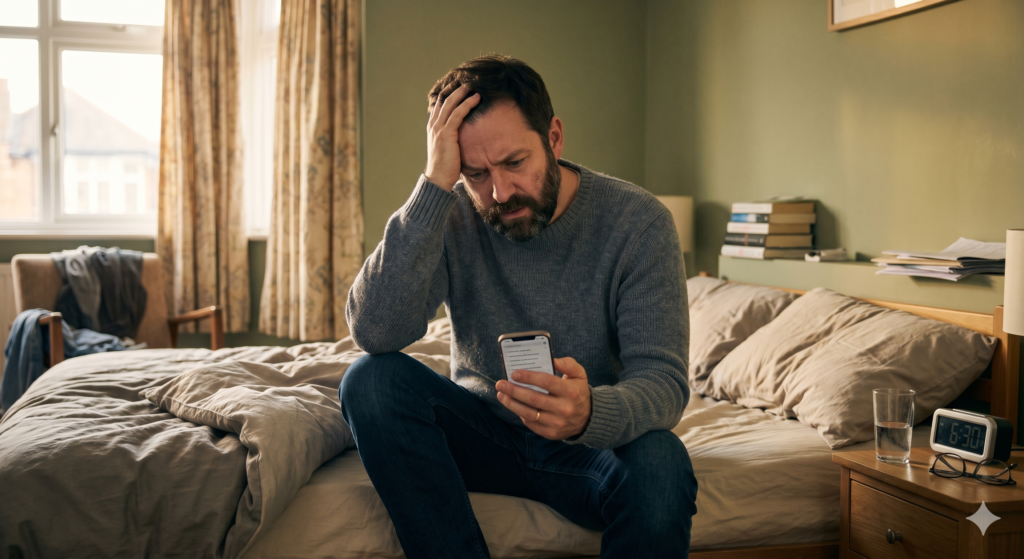
Almost every man feels some degree of tiredness after sex. It is one of the most normal things a human body can do, and science has a very clear explanation for why it happens. But there is a point where normal post-sex fatigue ends and something far more serious begins. Knowing where that line is could change everything for men who have spent years dismissing a real medical condition as ordinary exhaustion. Or even asking if they were tired after sex or actually sick?
Why Normal Post-Sex Fatigue Happens
Sex is physical exercise. It raises your heart rate, engages multiple muscle groups, and demands real effort from your cardiovascular and nervous systems. When it is over, your body does what it always does after exertion. It rests.
But the tiredness after sex is not just about physical effort. It is also hormonal. During orgasm, the brain releases a powerful mix of chemicals including oxytocin, dopamine, serotonin, prolactin, endorphins, and vasopressin. Each of these plays a role in the warm, drowsy, deeply relaxed feeling that follows. Oxytocin in particular actively works against cortisol, which is the hormone that keeps you alert and awake. That is why so many men fall asleep almost immediately after sex.
Here is something most men never know. Semen itself contains melatonin, which is the hormone responsible for regulating sleep. For men, this adds another layer to post-sex sleepiness that has nothing to do with laziness or disinterest.
This is all completely normal. It is your body doing exactly what it is designed to do.
What Normal Post-Sex Fatigue Actually Looks Like
Normal post-sex fatigue follows a clear and consistent pattern. It feels like pleasant tiredness or relaxation, not illness. It goes away within minutes to a few hours. There are no flu-like symptoms, no fever, no muscle pain, no congestion. Your mind stays clear with no brain fog or difficulty finding words. You feel back to normal after rest or a good night of sleep. And it does not get in the way of work, relationships, or daily life the next day.
If that describes your experience after sex, you are fine. Your body is responding normally to one of its most natural processes.
When something else is happening
Now consider a very different experience. You finish having sex and within minutes, sometimes within seconds, something shifts. It does not feel like tiredness. It feels like the start of an illness. Your muscles begin to ache. A heaviness settles into your limbs. Your nose starts to congest. A fog rolls through your mind making it hard to concentrate, recall words, or follow a simple conversation. By the next morning you feel genuinely unwell. And you stay that way not for hours but for days.
This is not normal post-sex fatigue. This is a pattern that points toward a condition called Post Orgasmic Illness Syndrome, or POIS.
The Key Differences At A Glance
Here is a simple side by side comparison to help you identify which one you are dealing with:
- Onset: Normal fatigue arrives gradually during or after sex. POIS starts within seconds to hours of orgasm.
- Nature: Normal fatigue feels like pleasant tiredness and relaxation. POIS feels like flu-like illness and physical collapse.
- Duration: Normal fatigue resolves within minutes to a few hours. POIS lasts 2 to 7 days.
- Flu symptoms: Normal fatigue has none. POIS brings fever, chills, sweating, and sore throat.
- Muscle pain: Normal fatigue causes mild discomfort at most. POIS brings severe body-wide pain.
- Cognitive effects: Normal fatigue causes none. POIS brings brain fog, memory problems, and sometimes incoherent speech.
- Eye symptoms: Normal fatigue causes none. POIS brings burning, red, watery, and itching eyes.
- Mood: Normal fatigue leaves you calm, relaxed, and happy. POIS brings irritability, depression, and anxiety.
- The next day: With normal fatigue you are fully recovered. With POIS you are still unwell and often worse.
- Pattern: Normal fatigue varies depending on how tired or stressed you were. POIS happens consistently almost every single time.
- Impact on life: Normal fatigue has none. POIS affects work, relationships, and daily function.
The one question that separates normal post-sex fatigue from POIS more clearly than any symptom list ever could. is does this happen almost every single time you ejaculate, regardless of how you feel beforehand?
Normal post-sex fatigue varies. It is worse when you are already tired, stressed, or run down. It gets better when you are well rested. It does not follow a rigid predictable pattern.
POIS does not care how rested you are. It does not care whether you had sex or masturbated. It does not care whether you slept perfectly the night before. According to the diagnostic criteria established by researcher Marcel Waldinger, POIS occurs in more than 90% of ejaculation events. It is relentless, consistent, and unmistakable once you know what you are looking at.
The reason POIS goes undiagnosed for years, and sometimes decades, is partly because the overlap with normal fatigue creates real confusion in the early stages. Many men explain away the first few episodes as stress, poor sleep, or the start of a cold. By the time the pattern becomes impossible to ignore, they have often stopped mentioning it to partners or doctors out of embarrassment or the feeling that nobody will take them seriously.
Timing makes it harder too. POIS symptoms can begin within seconds of orgasm but sometimes take a few hours to fully develop. Because of this, men do not always connect what they are feeling to what just happened. They wake up the next morning feeling genuinely ill and reach for a completely different explanation.
Final Thoughts
Feeling tired after sex is normal. Feeling sick after sex, consistently, predictably, and for days at a time, is not.
If what you read in this article sounds familiar, you are not being dramatic and you are not imagining things. You may be one of the many men living with POIS without ever having a name for it.
The next step is understanding exactly what POIS looks like in detail, because the condition shows up differently in different men, and knowing your specific symptom pattern is the first step toward getting the right help.
👉 Read next: POIS Symptoms In Detail — The Seven Groups You Need To Know
Frequently Asked Questions
Is it normal to feel tired after sex every time?
Yes. Some degree of tiredness after sex is completely normal because of the hormonal changes that happen during orgasm. What is not normal is feeling physically ill, getting flu-like symptoms, or being unable to function properly for days afterward.
How long should tiredness after sex last?
Normal post-sex fatigue goes away within minutes to a few hours for most men. If tiredness or other symptoms continue beyond 24 hours and follow a consistent pattern after every ejaculation, that warrants a visit to a doctor.
Can dehydration cause fatigue after sex?
Yes. Sex is physical activity and can cause mild dehydration, which adds to tiredness. Drinking water before and after sex can help. But dehydration does not cause flu symptoms, muscle pain, or cognitive difficulties. If you experience those, something else is going on.
When should I see a doctor about fatigue after sex?
If your post-sex fatigue comes with flu-like symptoms, muscle pain, brain fog, or mood changes, and this happens consistently after ejaculation and lasts more than a day, see a urologist. When you go, specifically mention Post Orgasmic Illness Syndrome by name. Most doctors will not think to check for it unless you bring it up.
Is POIS the only condition that causes illness after sex?
No. Post-Coital Tristesse (PCT) is another condition that causes emotional symptoms like sadness or anxiety after sex. However PCT is primarily emotional and resolves within hours. POIS is physical, produces flu-like illness, and lasts for days. They are separate conditions with different causes and different timelines.
References
Abdessater, M., Elias, S., Mikhael, E., Alhammadi, A., & Beley, S. (2019). Post orgasmic illness syndrome: What do we know till now? Basic and Clinical Andrology, 29, 13. https://doi.org/10.1186/s12610-019-0093-7
Sonkodi B, Kopa Z, Nyirády P. Post Orgasmic Illness Syndrome (POIS) and Delayed Onset Muscle Soreness (DOMS): Do They Have Anything in Common? Cells. 2021 Jul 23;10(8):1867. doi: 10.3390/cells10081867. PMID: 34440637; PMCID: PMC8392034.
Nguyen, H. M. T., Bala, A., Gabrielson, A. T., & Hellstrom, W. J. G. (2018). Post-orgasmic illness syndrome: A review. Sexual Medicine Reviews, 6(1), 11–15. https://doi.org/10.1016/j.sxmr.2017.08.006
Schweitzer, R. D., O’Brien, J., & Burri, A. (2015). Postcoital dysphoria: Prevalence and psychological correlates. Sexual Medicine, 3(4), 235–243. https://doi.org/10.1002/sm2.74
Waldinger, M. D., & Schweitzer, D. H. (2002). Postorgasmic illness syndrome: Two cases. Journal of Sex and Marital Therapy, 28(3), 251–255. https://doi.org/10.1080/009262302760328280
Waldinger, M. D., Meinardi, M. M., Zwinderman, A. H., & Schweitzer, D. H. (2011). Postorgasmic illness syndrome (POIS) in 45 Dutch Caucasian males: Clinical characteristics and evidence for an immunogenic pathogenesis. Journal of Sexual Medicine, 8(4), 1164–1170. https://doi.org/10.1111/j.1743-6109.2010.02166.x
This article is for informational purposes only and does not constitute medical advice. Always consult a qualified healthcare professional regarding any medical condition.