
Modern medicine has given POIS sufferers antihistamines and hormonal therapies. Ancient medicine, thousands of years before POIS had a name, was already working on the underlying conditions that make the body vulnerable to it in the first place.
Adaptogenic herbs are a special category of plants that share one remarkable quality. They help the body handle stress without pushing it in any one direction. They do not stimulate. They do not sedate. They regulate, gently nudging the body back toward balance when chronic stress, inflammation, or hormonal disruption has pulled it off course.
For men living with POIS, that ability to regulate is not just interesting. It speaks directly to what the condition appears to involve at its deepest level. A nervous system and immune system that have lost their ability to process certain biological events without tipping into crisis. What these herbs and foods offer is not a cure. But for some men, they may represent one of the smartest and most accessible additions to a POIS management plan that does not require a prescription. And that is why they should be explored for managing post orgasmic illness syndrome (POIS) naturally.
Everything shared in this article comes from two places. Documented scientific research on each herb and food. And real, consistent, first-hand experience from people who have used them and seen the results. Both matter. Neither is dismissed.
Why Adaptogens Are Relevant To Managing Post Orgasmic Illness Syndrome (POIS)
To understand why adaptogens matter for post POIS, it helps to remember what the condition appears to involve.
A nervous system already running in chronic stress or survival mode. An immune system that overreacts with inflammation. Cortisol levels high enough to disrupt the body’s hormonal balance. Cognitive symptoms that suggest the brain itself is inflamed. And an autonomic nervous system that cannot smoothly shift between being activated and being calm.
Adaptogens address every single one of these problems. They work on the HPA axis, which is the body’s central stress control system connecting the brain to the adrenal glands. They reduce the inflammatory signals that drive immune overreaction. They support thinking and memory. And they do all of this without the side effects of pharmaceutical drugs and without needing a diagnosis that most doctors are not yet equipped to give.
Ayurvedic medicine, one of the world’s oldest healing systems, made this connection explicitly long ago. Practitioners treating POIS through Ayurvedic frameworks specifically recommend adaptogenic herbs as part of the protocol, focusing on reducing stress, calming the nervous system, and restoring the body’s natural equilibrium.
Ashwagandha: The Most Researched And Most Relevant
Ashwagandha, scientifically known as Withania somnifera, is the adaptogen with the strongest scientific evidence and the most direct connection to what happens in POIS.
Its active compounds work across multiple body systems at once. They calm the stress control system, block the inflammatory signals that drive immune overreaction, reduce oxidative stress which is the cellular damage caused by too many free radicals, and support the calming chemistry that an overactivated nervous system has often lost.
The clinical evidence behind ashwagandha is unusually strong for a herbal supplement. A review of nine clinical trials in stressed adults found that ashwagandha reduced cortisol by 11 to 33% over periods ranging from 30 to 112 days. A separate analysis of 15 studies covering 873 patients confirmed significant reductions in both stress and anxiety. A 2024 review published in peer-reviewed medical literature found evidence from clinical trials for improvements in cognitive performance, sleep quality, and mood within eight to twelve weeks of consistent use. For men with POIS specifically, three effects matter most:
- First, the cortisol reduction. A nervous system running on lower baseline cortisol going into ejaculation is less likely to tip into a full POIS attack. This connects directly to the nervous system framework discussed in the managing POIS article.
- Second, the immune regulation. Ashwagandha has been shown to regulate the activity of immune cells including T-cells and natural killer cells. This matters directly given that one of the leading theories about POIS involves the immune system reacting to the body’s own seminal proteins as if they were foreign invaders.
- Third, the cognitive support. Memory, concentration, and mental performance are consistently improved in clinical trials. For men who experience brain fog and difficulty thinking as their worst POIS symptoms, this is significant
The dose studied most in clinical trials is 300 to 600mg of standardized root extract daily, taken in the morning or split across two doses. Effects build over weeks rather than days. This is a long-term regulatory tool, not a quick fix.
Rhodiola Rosea: The Fatigue And Stress Specialist
Rhodiola rosea, also called golden root or Arctic root, has a long history of use across Northern Europe, Eastern Europe, and Asia, where it was traditionally used to improve physical and mental performance under harsh and demanding conditions. Modern science has confirmed much of what traditional medicine observed.
Rhodiola has well-documented anti-inflammatory, antioxidant, and brain-protective effects. It reduces fatigue, improves cognitive performance under stress, and demonstrated strong enough adaptogenic effects that the European Medicines Agency formally approved its traditional use for stress-related fatigue and exhaustion in 2011. That level of regulatory recognition is something very few herbal supplements ever achieve.
For men with POIS, Rhodiola is particularly relevant for the fatigue and cognitive symptom groups. Men who experience crushing exhaustion and mental fog as their worst symptoms may find Rhodiola a meaningful addition to their approach. It is generally taken at 200 to 400mg of standardized extract daily, ideally in the morning because it can be mildly energizing and may interfere with sleep if taken late in the day.
Panax Ginseng: The Immune Regulator
Panax ginseng, also called Asian ginseng, is one of the most thoroughly studied medicinal plants on earth and one of the most directly relevant to the immune side of POIS.
Its active compounds, called ginsenosides, have been shown to regulate both the immediate and the adaptive arms of the immune system. The immediate arm responds to threats instantly. The adaptive arm learns and remembers. Ginsenosides reduce the inflammatory signals that drive immune overreaction, including specific proteins called TNF-alpha and interleukins that researchers believe play a role in POIS attacks, while supporting the immune system’s overall ability to function properly.
Beyond its immune effects, Panax ginseng has been shown to improve mood and cognitive performance in healthy adults and is one of the few adaptogens with clinical evidence specifically for reducing fatigue. For men whose POIS involves strong immune and inflammatory features, ginseng represents one of the more targeted herbal options available.
Holy Basil (Tulsi): The Cortisol And Inflammation Regulator
Holy Basil, known as Tulsi in Ayurvedic medicine, is considered one of the most powerful anti-stress plants across South Asian healing traditions. Modern research is now beginning to explain why those traditions held it in such high regard.
A randomized double-blind study published in Frontiers in Nutrition found that adults taking 125mg of holy basil twice daily for eight weeks reported significantly lower stress and better sleep quality than the placebo group. A review of 24 separate studies found therapeutic effects across psychological stress, brain function, and metabolic health.
Holy basil has been shown to regulate the balance of inflammatory signals in the immune system, support the activity of lymphocytes which are the immune cells involved in targeted immune responses, and modulate the immune reaction in ways consistent with what POIS involves.
Its cortisol-lowering and nervous-system-calming effects make it a natural partner to ashwagandha. The two herbs are frequently combined in Ayurvedic formulations targeting stress and immune dysregulation, and the combination makes biological sense given how their mechanisms complement each other.
Vitex (Chasteberry): The Hormone Balancer Men Rarely Hear About
Vitex agnus-castus, commonly called chasteberry, has a 2,500-year history in traditional medicine. Most people associate it exclusively with women’s health. That association has caused a significant oversight, because Vitex works through mechanisms that are directly relevant to men with POIS.
The key is understanding where Vitex does its work. It acts on the pituitary gland, which is the master hormonal gland sitting at the base of the brain that controls virtually every downstream hormone in the body including testosterone, prolactin, LH, and FSH.
Chaste tree berry acts upon the pituitary of both genders, the master gland which oversees blood hormone balance. It stabilizes testosterone levels and the pituitary messenger LH, maintaining hormone levels that enhance sexual interest. It helps a man’s body balance testosterone with estrogen. Limiting estrogen is a highly effective way to support the predominance of testosterone.
For men with POIS, the connection to prolactin is particularly significant. After orgasm, prolactin levels spike in all men as part of the normal post-ejaculatory response. Research suggests that in some POIS sufferers this spike may be more intense and more prolonged than in men without the condition, contributing to the fatigue, mood changes, and general unwellness that follow. Vitex inhibits pituitary prolactin via binding and down-regulation of dopamine-2 receptors in pituitary cells. A calmer, more regulated prolactin response after ejaculation may mean a less severe POIS attack.
The calming effect that some men report from Vitex, that sense of feeling settled, regulated, and mentally clear, is the direct result of its action on the dopamine system. By modulating dopamine receptors in the pituitary, Vitex produces genuine neurological regulation rather than sedation. The body feels safe. The nervous system stops running on high alert. And a nervous system that feels safe is a nervous system less likely to interpret ejaculation as a threat.
Vitex is typically taken as a tea, tincture, or standardized capsule. Effects are gradual and build over weeks of consistent use. Men considering Vitex should discuss it with a healthcare provider, particularly those with existing hormonal conditions or those taking medications that affect the dopamine or hormonal systems.
Jatamansi: The Forgotten Herb Named In POIS Treatment
Of all the herbs relevant to POIS, Jatamansi (Nardostachys jatamansi) is perhaps the least known in Western medicine. Yet it is one of the herbs specifically named in Ayurvedic POIS treatment protocols alongside ashwagandha.
Jatamansi is a root herb traditionally used for its calming effects on the nervous system, its ability to improve sleep quality, and its capacity to reduce what Ayurveda calls Vata imbalance. Vata is the physiological force governing movement, nervous system function, and the body’s elimination processes. When Vata is disrupted, the nervous system becomes erratic, stress responses become unpredictable, and the kind of systemic dysfunction that characterizes POIS becomes more likely.
Modern research on Jatamansi is not as extensive as the research on ashwagandha or Rhodiola, but what exists supports its traditional reputation for protecting the nervous system and reducing anxiety. For men drawn to Ayurvedic approaches to POIS, Jatamansi is worth knowing about and worth discussing with a practitioner experienced in herbal medicine.
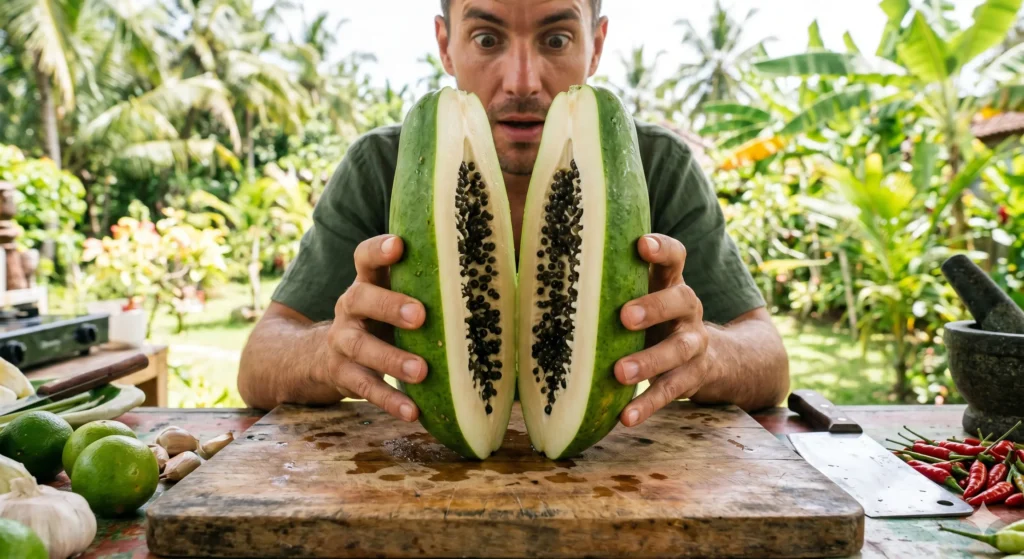
Unripe Papaya: The Accessible Remedy That Science Is Beginning To Understand
Not everything that helps is rare, expensive, or hard to find. Sometimes the most powerful tools are the ones sitting in the market around the corner. Unripe papaya is one of them. And unlike every other item in this article, this one comes with something no clinical trial can replicate. Direct, consistent, first-hand experience from real people who used it and watched it work.
Most people have never thought of unripe papaya as medicine. But unripe papaya, specifically the green, firm, not-yet-ripe version prepared with its skin still on, carries a therapeutic profile that is directly relevant to what POIS does to the body. The key is understanding what makes unripe papaya fundamentally different from the sweet, orange ripe fruit most people are familiar with.
Ripe papaya is sweet. It contains significant sugar. It is nutritious and pleasant to eat. Unripe papaya contains almost no sugar. It is firm, dense, and distinctly bitter, especially when prepared with the skin on. That bitterness is not a flaw. It is the sign of something important. Research has specifically confirmed that tryptophan levels in papaya correlate directly with bitterness intensity. The more bitter the preparation, the higher the concentration of the compounds responsible for its therapeutic effects. Tryptophan levels showed one of the highest correlations with bitterness intensity in papaya, meaning that a more bitter preparation indicates higher concentrations of the bioactive compounds.
Most nutritional databases list tryptophan content for ripe papaya. A 2024 peer-reviewed study published in the International Journal of Health Research and Physical Study specifically analyzed the amino acid profile of unripe papaya and confirmed the presence of tryptophan at 0.52g per 100g of protein. This is a different measurement from ripe papaya data, which reflects a fruit with a completely different nutritional composition, one full of sugar and water rather than the concentrated bioactive compounds found in the unripe version.
But the tryptophan content is only part of the story. The more important compound in unripe papaya for POIS is an enzyme called papain. Papain is found in the latex of the fruit and is dramatically more concentrated in unripe papaya than in the ripe version. As papaya ripens, papain levels drop substantially. This is why traditional medicine across tropical cultures has specifically used the unripe fruit rather than the ripe one, and why the two preparations are not interchangeable.
Papain heals and supports the gut lining. It breaks down proteins into amino acids the body can absorb and use. And here is where the mechanism for deep sleep becomes clear. The gut produces approximately 90% of the body’s serotonin. A compromised gut, one inflamed by chronic stress, poor diet, or the immune overreaction that POIS involves, cannot produce serotonin efficiently. Less serotonin means less melatonin. Less melatonin means disrupted sleep. And disrupted sleep means a nervous system that cannot complete the repair and regulation it needs to function properly.
Papain does not just provide tryptophan. It actively improves the gut environment in which serotonin is produced. By supporting the gut lining, reducing inflammation in the intestinal tract, and improving the efficiency of protein digestion, unripe papaya creates the conditions the gut needs to do its neurochemical work. The tryptophan that arrives then converts to serotonin in a gut that is actually capable of making that conversion. The serotonin becomes melatonin. And what follows is not ordinary drowsiness but deep, restorative sleep of the kind that the brain uses to clear the waste products of neurological activity, consolidate memory, regulate the stress hormones governing the next day, and repair the systems that chronic stress and POIS have been disrupting.
Many people who have used unripe papaya consistently report something that no ripe papaya or standard sleep supplement produced for them. A depth and speed of sleep onset that felt different from anything they had experienced before. They simply lay down and were gone. Not restless sleep. Not the kind of sleep interrupted by 3am wakefulness. The kind that you wake from feeling genuinely restored rather than just rested. The research has not yet formally studied this specific experience in a clinical trial. But the mechanism it has confirmed points in exactly the same direction.
There is another effect worth describing honestly because it is equally consistent and equally unexplained by most health writing. For headaches, prepare unripe papaya boiled in plenty of water with a pinch of salt and any available protein, fish, chicken, eggs, whatever is at hand. The body cools down almost immediately. Not over hours. Almost immediately.
This is not a mystery when you understand what is happening inside the body. Most headaches have inflammation at their root. Inflammation feels like heat because it is heat. The body literally runs warmer during inflammatory states. Papain is one of the fastest-acting natural anti-inflammatory compounds identified in food research. When inflammation drops rapidly, the blood vessels that were constricted relax, circulation improves, and the nervous system shifts from the activated sympathetic state toward the calmer parasympathetic one. The body feels cooler and quieter because it genuinely is.
The pinch of salt in this preparation is not incidental. Many headaches involve electrolyte imbalance, often from dehydration or stress-driven cortisol that depletes sodium and potassium. Salt restores that electrolyte balance quickly. The protein, whether fish or chicken or eggs, provides the amino acids needed for neurotransmitter production and tissue repair. And the high water content of the boiled preparation addresses the dehydration that most headaches involve whether or not we recognize it.
The result is a preparation that addresses inflammation, electrolyte imbalance, dehydration, and neurotransmitter support simultaneously. Not by accident. Because the people who developed this preparation across generations understood something about how the body responds to food that no single clinical trial has yet put together in one study.
For POIS specifically, unripe papaya supports the gut, calms systemic inflammation, promotes deep restorative sleep, and helps the nervous system do the repair work that every POIS sufferer’s body desperately needs between episodes. It is accessible in almost every tropical market. It is inexpensive. It has no serious side effects for most healthy adults when prepared by boiling. And it has been tested not in a laboratory but in real kitchens, by real people, with consistent results.
The research has not yet caught up with the experience. But the mechanism it has confirmed points in exactly the same direction that experience has always pointed.
A few important cautions. Avoid the seeds completely. Research confirms that papaya seeds can reduce sperm count and motility and should not be consumed by men concerned about fertility. People with latex allergies should approach unripe papaya with caution as the latex content can trigger allergic reactions in sensitive individuals. Unripe papaya should always be cooked before consumption, not eaten raw in large amounts. Boiling is the simplest, safest, and most effective preparation. Pregnant women should avoid unripe papaya entirely as the latex content has been associated with uterine contractions.
How To Use These Herbs And Foods Wisely
These herbs and foods are not quick fixes and they are not interchangeable. Each one has a distinct profile, a distinct mechanism, and a distinct body of evidence behind it. A few principles apply across all of them.
They work over time. Most adaptogens require consistent daily use for at least four to eight weeks before their regulatory effects become apparent. Men who try them for a week and decide they are not working have not given them a fair trial. These herbs work by gradually shifting the body’s baseline physiology, and that kind of shift takes time.
They work better together. Many men find that combining two complementary herbs produces better results than using either one alone. Ashwagandha and Rhodiola is one of the most studied and best-tolerated pairings. Ashwagandha and Vitex address overlapping hormonal and nervous system pathways in ways that complement each other well. Unripe papaya alongside ashwagandha addresses both the gut foundation and the cortisol load simultaneously. The standard approach is to introduce one thing at a time, assess how your body responds, and then add another if needed.
They are not without cautions. Ashwagandha may not be suitable for men with thyroid conditions or those taking sedative medications. Rhodiola can be mildly stimulating and should be taken early in the day. Panax ginseng may interact with blood-thinning medications. Vitex has well-documented hormonal effects and should be discussed with a healthcare provider. Any herb use should be discussed with a healthcare professional, especially if you are already taking pharmaceutical treatments for POIS or other conditions.
A Better Way Than What Most Men Choose
There is something important that needs to be said plainly here.
Many men dealing with the kind of chronic stress, nervous system dysregulation, hormonal disruption, and daily anxiety that underlies POIS reach for something to calm themselves down. And what too many of them reach for is a cigarette. Or something stronger to smoke.
The short-term relief is real. Nicotine does interact with dopamine pathways. Cannabis does reduce anxiety temporarily. But the long-term cost is significant. Smoking drives inflammation throughout the body, damages the cardiovascular system that supports healthy blood flow to every tissue, disrupts hormonal balance, and over time worsens the very nervous system dysregulation it temporarily masks. It treats the signal without addressing the source. And it adds new problems on top of the original ones.
The herbs and foods in this article work through the same pathways that smoking temporarily hijacks, the dopamine system, the stress control system, the immune and hormonal regulation, but they do so by restoring function rather than overriding it. Ashwagandha genuinely lowers cortisol through the body’s own stress regulation system. Vitex genuinely regulates prolactin and testosterone through the pituitary. Rhodiola genuinely reduces fatigue through mechanisms the body recognizes and can sustain. Unripe papaya genuinely heals the gut that produces the serotonin the nervous system needs to feel calm without chemical assistance.
These are not workarounds. They are not temporary escapes. They are tools that work with the body’s own chemistry to gradually restore the stability that chronic stress has taken away. They are tested. They have been used by cultures around the world for generations precisely because they work. And they have been tested by real people in real life with consistent and reproducible results.
For a man with POIS looking for something to calm the nervous system, support the hormones, and make daily life feel less like a battle, these are not just safer choices than smoking. They are fundamentally smarter ones.
A Final Thought
None of these herbs appear in POIS clinical trials. Unripe papaya has not been formally studied for POIS at all. That absence reflects the research gap around POIS itself and the broader gap in studying traditional food medicine, not evidence that these approaches do not help.
What the science does confirm is that each of these herbs and foods addresses mechanisms directly implicated in POIS. The cortisol surge. The inflammatory immune reaction. The nervous system dysregulation. The cognitive disruption. The prolactin spike. The testosterone imbalance. The gut dysfunction that prevents the production of the serotonin and melatonin that sleep and recovery depend on.
For men who have found conventional medicine insufficient, these represent some of the most scientifically grounded, practically accessible, and honestly reported options available. Used consistently, alongside other approaches, and alongside whatever conventional medical care is available, they may help shift the conditions that make POIS possible, one degree of regulation at a time.
The body knows things that the research has not yet caught up with. The job of honest health writing is to respect both.
👉 Return to: Managing POIS — The Non-Orthodox Approaches That Are Changing The Conversation
Frequently Asked Questions
Which herb should I start with for POIS?
Ashwagandha is the most logical starting point. It has the strongest evidence base and the most direct connection to the mechanisms involved in POIS, including cortisol reduction, immune regulation, and cognitive support. Give it at least eight weeks at 300 to 600mg of standardized root extract daily before deciding whether it is helping.
Can men take Vitex for POIS?
Yes, and the mechanisms are directly relevant. Vitex acts on the pituitary gland in both men and women, stabilizing testosterone through LH regulation, reducing prolactin through its dopaminergic action, and balancing the testosterone-to-estrogen ratio. For men with POIS, the prolactin-lowering effect is particularly significant since prolactin spikes after orgasm and may contribute to post-ejaculatory symptoms. Discuss with a healthcare provider before starting.
Can I take multiple herbs at the same time?
Not really. Combining adaptogens is common and often more effective than using a single herb. However, herbs like vitex works better alone on empty stomach. Ashwagandha and Rhodiola is one of the most studied and best-tolerated combinations. Introduce one herb at a time so you can assess how your body responds to each before adding another.
How long before I notice a difference?
Most adaptogens require four to twelve weeks of consistent daily use before their regulatory effects become noticeable. They work by gradually shifting baseline physiology, not by producing immediate effects. Patience and consistency are essential.
Can unripe papaya really help with POIS?
The mechanism is biologically credible. Papain, which is dramatically more concentrated in unripe papaya than ripe, heals the gut lining and improves serotonin production. Better serotonin production means better melatonin synthesis and deeper restorative sleep. Deep sleep directly supports nervous system repair and cortisol regulation, both of which are central to managing POIS. The experience of people who have used it consistently points in the same direction that the mechanism predicts.
Why does unripe papaya with skin work better than peeled?
Research confirms that tryptophan and other bioactive compounds correlate directly with bitterness in papaya. The skin and the tissue just beneath it contain higher concentrations of papain and other active compounds. Preparing unripe papaya with the skin on produces a more bitter and more therapeutically potent preparation than peeling it first.
Can unripe papaya help with headaches?
Consistently reported first-hand experience suggests yes, particularly when prepared boiled with a pinch of salt and protein. The mechanism involves papain’s rapid anti-inflammatory action, salt’s electrolyte-restoring effect, protein’s amino acid support for neurotransmitter function, and the hydration provided by the boiling water. The combination addresses inflammation, electrolyte imbalance, dehydration, and neurotransmitter depletion simultaneously, which covers the most common root causes of headaches.
Are these herbs better than smoking for calming the nervous system?
Significantly better. Smoking provides temporary relief through dopamine and other pathways but drives chronic inflammation, disrupts hormonal balance, damages cardiovascular health, and worsens nervous system dysregulation over time. Adaptogenic herbs and unripe papaya work through the same pathways but restore function rather than override it. They are safer, sustainable, and address root causes rather than masking the signal.
Are these approaches safe to use alongside conventional POIS treatment?
Yes, with appropriate discussion with your healthcare provider. These herbs and foods work best as additions to conventional care rather than replacements. Let your doctor know what you are incorporating so your overall care can be properly coordinated.
Is ashwagandha safe for all men?
Ashwagandha is well tolerated by most healthy adults. It may not be appropriate for men with overactive thyroid conditions, autoimmune conditions requiring immune suppression, or those taking sedative medications. Always consult a healthcare provider before starting any new supplement.
References
Bachour G, Samir A, Haddad S, Houssaini MA, El Radad M. Effects of Ashwagandha Supplements on Cortisol, Stress, and Anxiety Levels in Adults: A Systematic Review and Meta-Analysis. BJPsych Open. 2025 Jun 20;11(Suppl 1):S39. doi: 10.1192/bjo.2025.10136. PMCID: PMC12242034.
Ivanova Stojcheva, E., & Quintela, J. C. (2022). The Effectiveness of Rhodiola rosea L. Preparations in Alleviating Various Aspects of Life-Stress Symptoms and Stress-Induced Conditions—Encouraging Clinical Evidence. Molecules, 27(12), 3902. https://doi.org/10.3390/molecules27123902.
Kong, Y. R., Jong, Y. X., Balakrishnan, M., Bok, Z. K., Weng, J. K. K., Tay, K. C., Goh, B. H., Ong, Y. S., Chan, K. G., Lee, L. H., & Khaw, K. Y. (2021). Beneficial Role of Carica papaya Extracts and Phytochemicals on Oxidative Stress and Related Diseases: A Mini Review. Biology, 10(4), 287. https://doi.org/10.3390/biology10040287.
Daley SF, Shreenath AP. The Role of Dietary Fiber in Health Promotion and Disease Prevention: A Practical Guide for Clinicians. [Updated 2025 Dec 1]. In: StatPearls [Internet]. Treasure Island (FL): StatPearls Publishing; 2026 Jan-. Available from: https://www.ncbi.nlm.nih.gov/books/NBK559033/
Holistic Nootropics. L-Tryptophan Clinical Evidence Review. holisticnootropics.com. 2026.
Instalab. Supplements to Reduce Cortisol: Only One Has Strong Human Evidence. instalab.com. 2026.
MDPI Nutrients. Effects of Diet on Sleep: A Narrative Review. 2020. https://www.mdpi.com/2072-6643/12/4/936
MyFoodData / USDA Food Composition Database. Total Amino Acids in Papaya. tools.myfooddata.com.
Nasri S, Oryan S, Rohani AH, Amin GR. The effects of Vitex agnus castus extract and its interaction with dopaminergic system on LH and testosterone in male mice. Pak J Biol Sci. 2007 Jul 15;10(14):2300-7. doi: 10.3923/pjbs.2007.2300.2307. PMID: 19070148.
Okeniyi JA, Ogunlesi TA, Oyelami OA, Adeyemi LA. Effectiveness of dried Carica papaya seeds against human intestinal parasitosis: a pilot study. J Med Food. 2007 Mar;10(1):194-6. doi: 10.1089/jmf.2005.065. PMID: 17472487.
Eftekhari MH, Rostami ZH, Emami MJ, Tabatabaee HR. Effects of “vitex agnus castus” extract and magnesium supplementation, alone and in combination, on osteogenic and angiogenic factors and fracture healing in women with long bone fracture. J Res Med Sci. 2014 Jan;19(1):1-7. PMID: 24672557; PMCID: PMC3963316.
Dabbous Z, Atkin SL. Hyperprolactinaemia in male infertility: Clinical case scenarios. Arab Journal of Urology. 2018 Mar;16(1):44-52. DOI: 10.1016/j.aju.2017.10.002. PMID: 29713535; PMCID: PMC5922222.
Singh, Pratibha; Singh, Manish1; Cugati, Goutham2; Singh, Ajai Kumar3. Hyperprolactinemia: An often missed cause of male infertility. Journal of Human Reproductive Sciences 4(2):p 102-103, May–Aug 2011. | DOI: 10.4103/0974-1208.86094
Buvat, J. Hyperprolactinemia and sexual function in men: a short review. Int J Impot Res 15, 373–377 (2003). https://doi.org/10.1038/sj.ijir.3901043
Ratan ZA, Youn SH, Kwak YS, Han CK, Haidere MF, Kim JK, Min H, Jung YJ, Hosseinzadeh H, Hyun SH, Cho JY. Adaptogenic effects of Panax ginseng on modulation of immune functions. J Ginseng Res. 2021 Jan;45(1):32-40. doi: 10.1016/j.jgr.2020.09.004. Epub 2020 Sep 17. PMID: 33437154; PMCID: PMC7790873.
Jamnekar PP, Dehankar TJ, Bedre RV, Dharan BG, Agravat B, Agravat H. Ashwagandha as an Adaptogenic Herb: A Comprehensive Review of Immunological and Neurological Effects. Cureus. 2025 Nov 5;17(11):e96183. doi: 10.7759/cureus.96183. PMID: 41356880; PMCID: PMC12680924.
National Geographic. Do Natural Adaptogens Like Ginseng Actually Combat Stress? 2024.
Pacific Center for Naturopathic Medicine. Low Libido is Helped by Chaste Tree Berry Concentrate. doctorherdmanclinic.com. 2022.
Sejbuk M, Mirończuk-Chodakowska I, Witkowska AM. Sleep Quality: A Narrative Review on Nutrition, Stimulants, and Physical Activity as Important Factors. Nutrients. 2022 May 2;14(9):1912. doi: 10.3390/nu14091912. PMID: 35565879; PMCID: PMC9103473.
PubMed. Effects, Mechanisms of Action and Application of Vitex agnus-castus for Improvement of Health and Female Reproduction. 2025. doi: 10.1002/ptr.8438
Santana LF, Inada AC, Espirito Santo BLSD, Filiú WFO, Pott A, Alves FM, Guimarães RCA, Freitas KC, Hiane PA. Nutraceutical Potential of Carica papaya in Metabolic Syndrome. Nutrients. 2019 Jul 16;11(7):1608. doi: 10.3390/nu11071608. PMID: 31315213; PMCID: PMC6682863.
Singh, Pratibha; Singh, Manish1; Cugati, Goutham2; Singh, Ajai Kumar3. Hyperprolactinemia: An often missed cause of male infertility. Journal of Human Reproductive Sciences 4(2):p 102-103, May–Aug 2011. | DOI: 10.4103/0974-1208.86094
Jioe, I. P. J., Shiesh, C., & Lin, H. (2023). Bitterness of Papaya Milk Is Related to Protein and Free Amino Acid Contents, with Phenylalanine and Tyrosine/Tryptophan Levels Being the Most Important. HortScience, 58(3), 261–267. https://doi.org/10.21273/HORTSCI16941-22
Fernstrom, J. D. (2016). A perspective on the safety of supplemental tryptophan based on its metabolic fates. The Journal of Nutrition, 146(12), 2601S–2608S. https://doi.org/10.3945/jn.115.228643
Harris D, Szymczak S, Schuchardt S et al (2024).Tryptophan degradation as a systems phenomenon in inflammation – an analysis across 13 chronic inflammatory diseases. eBioMedicine, 102.
Waldinger MD. Post Orgasmic Illness Syndrome (POIS). Translational Andrology and Urology. 2016.
Yao A, Wilson JA, Ball SL. Autonomic nervous system dysfunction and sinonasal symptoms. Allergy Rhinol (Providence). 2018 Apr 16;9:2152656718764233. doi: 10.1177/2152656718764233. PMID: 29977656; PMCID: PMC6028164.
This article is for informational purposes only and does not constitute medical advice. Always consult a qualified healthcare professional before starting any supplement, herbal regimen, or making significant changes to your diet.